Category: SEO

  • How to Choose the Best SEO Agency in Mumbai? A Complete Guide for Businesses

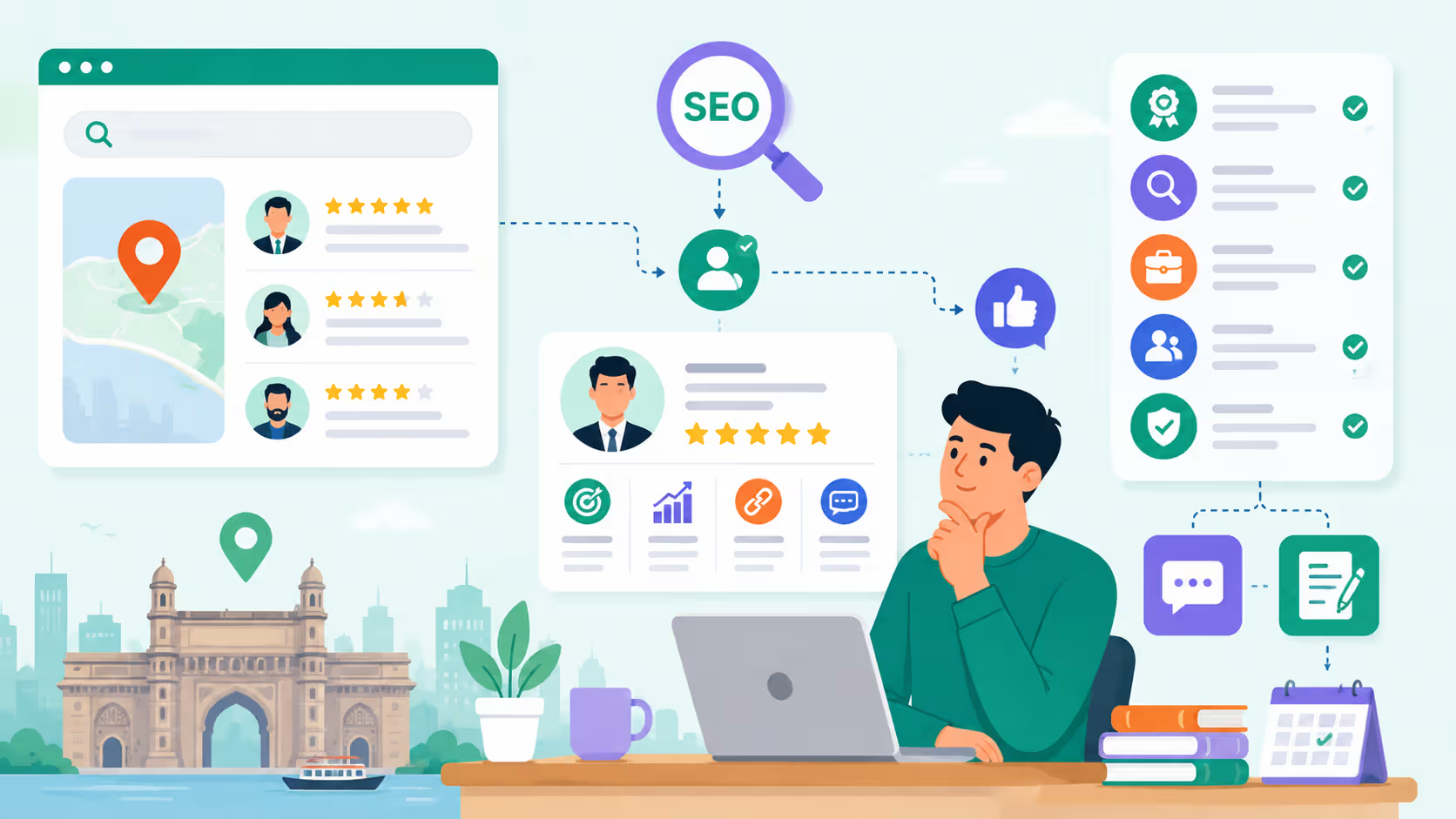
    If you’re trying to figure out how to choose the best SEO agency in Mumbai, you’ll quickly realise that almost every agency promises the same thing—better rankings, more traffic, and guaranteed results. The difficult part isn’t finding an SEO company; it’s knowing which one can actually grow your business.

    Every agency claims they’re the best.

    Every website promises first-page rankings.

    Every proposal says they have years of experience, proven strategies, and guaranteed results.

    As a business owner, that makes the decision harder—not easier.

    Because the real question isn’t “Which SEO agency has the best website?”

    It’s…

    “Which SEO agency will actually help my business grow?”

    Over the years, I’ve spoken with hundreds of business owners who had already worked with one or two SEO agencies before approaching us.

    Interestingly, most of them didn’t complain about rankings.

    They complained about something much more important.

    “We spent money every month, but our enquiries never increased.”

    That single sentence explains why many businesses feel disappointed with SEO.

    They expected business growth.

    Instead, they received reports full of keyword rankings, backlinks, and traffic charts.

    None of those metrics pay salaries.

    Customers do.

    That’s why choosing the right SEO agency in Mumbai is one of the most important marketing decisions you’ll make.

    The right partner doesn’t just improve rankings.

    They help your business generate more qualified leads, reduce dependence on paid advertising, strengthen your online reputation, and create a sustainable source of customer acquisition.

    The wrong partner can waste months of your marketing budget while your competitors continue growing.

    This guide will show you exactly how to evaluate an SEO agency before signing a contract.

    Whether you’re a startup founder, local business owner, SME, or marketing manager, you’ll learn what really separates an average agency from one that can become a long-term growth partner.

    How Do You Choose the Best SEO Agency in Mumbai?

    If you’re looking for a quick answer, here’s the framework.

    Choose an SEO agency that:

    • Understands your business before discussing keywords.
    • Has real case studies with measurable business results.
    • Performs technical SEO, not just content writing.
    • Creates original, helpful content.
    • Uses ethical SEO practices.
    • Provides transparent reporting.
    • Understands AI search and modern SEO.
    • Focuses on leads and revenue rather than rankings alone.

    If an agency promises guaranteed rankings, unbelievably cheap pricing, or instant results, consider it a warning sign.

    SEO is a long-term investment, and the best agencies will be honest about both the opportunities and the time required to achieve meaningful results.

    Why Choosing the Right SEO Agency Matters More Than Ever

    Ten years ago, SEO was largely about ranking for keywords.

    Today, it’s about building a business that customers and search engines trust.

    People don’t simply click the first website they see anymore.

    They compare companies, read reviews, visit multiple websites, explore social media, and often ask AI tools for recommendations before making a decision.

    That means your SEO agency isn’t just improving your visibility.

    They’re shaping the first impression potential customers have of your business.

    The Cost of Choosing the Wrong Agency

    Imagine two businesses offering the same service.

    Both invest ₹50,000 every month in marketing.

    The first business spends everything on Google Ads.

    The second invests in Google Ads while also building a long-term SEO strategy.

    Initially, the first business receives more enquiries because paid advertising delivers immediate visibility.

    Six months later, something changes.

    The second company begins appearing organically whenever customers search for its services.

    Those visitors arrive without paying for every click.

    Month after month, the business starts generating enquiries from organic search while reducing its dependence on advertising.

    One business rents visibility.

    The other owns it.

    That’s why SEO should never be viewed as a monthly expense.

    It’s a long-term business asset.

    Bad SEO Costs More Than You Think

    Many businesses assume the worst outcome of hiring the wrong agency is losing a few months of fees.

    The actual cost is often much higher.

    Poor SEO can result in:

    • Weak content that damages credibility
    • Technical issues that prevent pages from ranking
    • Low-quality backlinks that are difficult to remove
    • Missed opportunities to generate qualified leads
    • Falling behind competitors who invest strategically

    One recurring pattern I’ve seen is businesses spending the first three months with a new agency fixing mistakes made by the previous one.

    That recovery period delays growth and increases costs.

    Getting SEO right from the beginning is almost always cheaper than repairing poor work later.

    Before You Hire an SEO Agency, Define Your Business Goals

    One mistake many businesses make happens before they even contact an SEO company.

    They don’t clearly define what success looks like.

    As a result, they compare agencies based on price rather than strategy.

    Before speaking with any agency, ask yourself one simple question.

    Why do I want SEO?

    Your answer determines the type of strategy your business actually needs.

    For example:

    • A local service business may want more phone calls.
    • An ecommerce store may want more online sales.
    • A startup may want brand visibility.
    • A B2B company may want qualified enquiries.

    Those objectives require different SEO strategies.

    Traffic Isn’t the Goal

    One of the biggest misconceptions in SEO is believing that more traffic automatically means more business.

    It doesn’t.

    Imagine receiving 100,000 website visitors who have no intention of buying your service.

    Now compare that with 5,000 visitors who are actively searching for exactly what you offer.

    Which audience creates more revenue?

    Almost always, it’s the second.

    A professional SEO company focuses on attracting qualified visitors rather than simply increasing traffic numbers.

    That’s a major difference between agencies that understand business growth and those that only chase rankings.

    The 8 Factors That Separate Great SEO Agencies from Average Ones

    These eight factors form the evaluation framework I recommend to every business owner.

    Instead of comparing agencies based only on monthly pricing, compare them using these criteria.

    1. Do They Understand Your Business Before Talking About SEO?

    A surprising number of agencies begin their sales presentation by discussing keywords, backlinks, and rankings.

    Very few start by asking about your business.

    That should concern you.

    A good SEO strategy begins with questions like:

    • Who is your ideal customer?
    • Which services generate the highest profit?
    • Where do your best customers come from?
    • Who are your competitors?
    • What are your growth goals over the next 12 months?

    Without understanding your business, no agency can create a strategy that produces meaningful results.

    Business Impact

    When SEO aligns with business goals, every improvement contributes toward lead generation, customer acquisition, and long-term revenue.

    2. Ask for Business Results, Not Just Ranking Reports

    Almost every SEO agency showcases keyword rankings.

    Far fewer can demonstrate how those rankings improved a client’s business.

    When reviewing case studies, don’t stop at traffic graphs.

    Ask questions like:

    • How many enquiries increased?
    • Did conversion rates improve?
    • How much organic traffic became paying customers?
    • What business problem was solved?

    Those answers reveal whether the agency focuses on business growth rather than vanity metrics.

    One observation I’ve made over the years is that businesses rarely celebrate rankings.

    They celebrate more customers.

    That’s the metric that matters.

    3. Evaluate Their Technical SEO Expertise

    Technical SEO is one of the least visible aspects of SEO, yet it’s often the reason websites either succeed or struggle.

    Think of your website as a building.

    Content is the interior.

    Technical SEO is the foundation.

    Even beautifully written content won’t perform well if Google struggles to crawl, index, or understand your website.

    A professional SEO agency should evaluate:

    • Website speed
    • Mobile usability
    • Crawl errors
    • Indexing issues
    • Internal linking
    • Structured data
    • Core Web Vitals
    • Site architecture

    Many agencies skip this work because it’s more difficult than publishing blog posts.

    That’s exactly why you should ask about it.

    Business Impact

    A technically healthy website loads faster, provides a better user experience, ranks more consistently, and improves conversion opportunities.

    4. Their Content Strategy Should Build Trust, Not Just Rankings

    The internet doesn’t need another thousand AI-generated blog posts saying the same thing.

    Your customers don’t either.

    Content should answer real questions, solve real problems, and help visitors make informed buying decisions.

    Ask the agency:

    • Who writes your content?
    • How do you research search intent?
    • How do you ensure originality?
    • How do you demonstrate expertise?
    • How do you build topical authority?

    One trend I’ve observed recently is businesses publishing more content than ever while generating fewer enquiries.

    The issue isn’t quantity.

    It’s relevance.

    Businesses that publish fewer, higher-quality resources usually build stronger authority than those producing dozens of average articles every month.

    Business Impact

    Helpful content builds trust, improves conversions, increases topical authority, and creates long-term organic growth.

    5. Local SEO Experience Matters

    If your customers are in Mumbai, local SEO should be one of your agency’s strengths.

    Many buying decisions begin with searches like:

    • SEO Company in Mumbai
    • Digital Marketing Agency Near Me
    • Website Development Company Mumbai

    These searches indicate strong commercial intent.

    Your agency should optimize more than your website.

    They should also improve your Google Business Profile, local citations, reviews, service-area pages, and local schema markup.

    Businesses that ignore local SEO often miss some of their highest-converting opportunities.

    6. Understand Their Link Building Philosophy

    Backlinks remain one of Google’s strongest trust signals.

    The problem is that many agencies still focus on quantity instead of quality.

    One relevant backlink from an authoritative website can be more valuable than hundreds of low-quality directory links.

    Ask the agency how they earn links.

    If the answer revolves around buying backlinks or guaranteeing hundreds of links every month, proceed with caution.

    Ethical link building focuses on authority, relevance, and long-term credibility—not shortcuts.

    7. Transparency in Reporting Is Non-Negotiable

    One of the biggest frustrations business owners share with me is this:

    “Our agency sent reports every month, but we never understood whether SEO was actually working.”

    I’ve reviewed reports that were over 40 pages long. They contained keyword rankings, backlinks, impressions, and technical data.

    They looked impressive.

    But they failed to answer the only question that mattered:

    “How is SEO helping my business grow?”

    A good SEO report should explain the story behind the numbers.

    It should tell you:

    • What work was completed this month.
    • What improvements were achieved.
    • Which pages performed well.
    • How organic traffic changed.
    • How many enquiries or leads were generated.
    • What challenges were identified.
    • What actions are planned for the next month.

    An agency that cannot explain SEO in simple business language probably doesn’t understand your business priorities.

    Look Beyond Rankings

    Rankings are useful, but they don’t always reflect business success.

    For example, ranking #1 for a keyword that never generates enquiries has very little commercial value.

    Instead, ask your agency to report on metrics such as:

    • Qualified organic traffic
    • Contact form submissions
    • Phone enquiries
    • Organic conversion rate
    • Cost per lead
    • Revenue generated from organic search

    Those metrics help you understand whether your SEO investment is delivering a return.

    Business Impact

    Transparent reporting builds trust, improves decision-making, and ensures both you and the agency remain focused on business outcomes rather than vanity metrics.

    8. Choose a Growth Partner, Not Just an SEO Vendor

    This is the final factor, and in my opinion, it’s the most important.

    Many businesses think they’re hiring an SEO agency.

    They’re actually choosing a long-term business partner.

    There’s a big difference.

    A vendor completes tasks because they’re included in the contract.

    A growth partner constantly looks for opportunities to improve your business.

    When competitors launch new content, they recommend a response.

    When Google updates its algorithm, they adapt the strategy.

    When new AI search features emerge, they prepare your website before your competitors react.

    That’s the kind of partnership that creates sustainable growth.

    One recurring pattern I’ve seen is that the most successful client relationships are those where SEO becomes part of the company’s overall growth strategy—not just another monthly marketing activity.

    Business Impact

    A strategic SEO partner doesn’t just improve rankings.

    They help your business:

    • Generate more qualified leads.
    • Reduce customer acquisition costs.
    • Increase brand authority.
    • Improve customer trust.
    • Create a long-term competitive advantage.

    SEO Agency Evaluation Scorecard

    If you’re comparing multiple agencies, use this scorecard before making a decision.

    Score each agency from 1 to 10 for every category.

    Evaluation CriteriaScore (1–10)
    Business Understanding
    Technical SEO Expertise
    Content Strategy
    Local SEO Experience
    Link Building Approach
    Reporting Transparency
    Communication
    AI & Future SEO Readiness
    Pricing Transparency
    Overall Confidence

    How to Use This Scorecard

    An agency scoring 85–100 is likely to be a strong long-term partner.

    Scores between 70–85 deserve further discussion.

    Anything below 70 should raise concerns.

    This simple framework helps remove emotion from the decision and allows you to compare agencies objectively.

    Red Flags That Should Make You Walk Away

    Choosing an SEO agency isn’t only about identifying good qualities.

    It’s equally important to recognize warning signs.

    Here are some of the biggest red flags.

    They Guarantee #1 Rankings

    No agency controls Google’s algorithm.

    Ethical SEO companies never guarantee rankings.

    They guarantee effort, transparency, and best practices—not specific positions.

    Their Pricing Seems Too Good to Be True

    Professional SEO requires experienced people, premium tools, research, content creation, technical expertise, and continuous optimization.

    If an agency offers complete SEO for an unusually low price, ask yourself what they’re leaving out.

    Cheap SEO often becomes expensive when you have to repair the damage later.

    They Never Audit Your Website

    Imagine visiting a doctor who prescribes medicine before asking about your symptoms.

    That’s exactly what happens when an SEO agency sends a proposal without reviewing your website.

    A professional agency should understand your business, competitors, and website before recommending a strategy.

    They Focus Only on Backlinks

    Backlinks are important.

    They’re not the entire SEO strategy.

    If every conversation revolves around the number of backlinks they’ll build each month, that’s a warning sign.

    Modern SEO includes technical optimization, content strategy, user experience, topical authority, and conversion optimization.

    They Avoid Difficult Questions

    Ask about reporting.

    Ask about technical SEO.

    Ask about AI search.

    Ask how they measure ROI.

    Experienced agencies enjoy these conversations.

    Inexperienced agencies often avoid them.

    Questions You Should Ask Before Hiring an SEO Company in Mumbai

    The quality of your questions often determines the quality of the agency you hire.

    Here are some of the most important ones.

    About Strategy

    • How will you understand my business before creating an SEO strategy?
    • What KPIs will define success?
    • How do you prioritise opportunities?

    About Technical SEO

    • Will you perform a complete SEO audit?
    • Who fixes technical issues?
    • How do you improve website performance?

    About Content

    • Who writes the content?
    • Is AI used?
    • How do you ensure originality?
    • How do you build topical authority?

    About Reporting

    • What reports will I receive?
    • How often will we review progress?
    • How do you measure ROI?

    About AI & Future SEO

    • How are you preparing websites for AI-powered search?
    • How do you optimise content for AI Overviews?
    • How do you stay updated with Google’s algorithm changes?

    If an agency answers these questions confidently and transparently, you’re probably speaking with professionals who understand modern SEO.

    SEO Agency vs Freelancer vs In-House Team

    Many business owners ask whether they should hire an agency, a freelancer, or build an internal SEO team.

    There’s no universal answer.

    It depends on your business stage, budget, and long-term goals.

    FactorSEO AgencyFreelancerIn-House Team
    CostMediumLowHigh
    Technical ExpertiseHighVariesDepends on Hiring
    ScalabilityHighModerateModerate
    Access to SpecialistsExcellentLimitedRequires Multiple Hires
    ReportingStructuredVariesInternal
    Best ForGrowing BusinessesSmall ProjectsLarge Enterprises

    For most startups and SMEs, an experienced SEO agency offers the best balance between expertise, scalability, and cost.

    How Much Do SEO Services in Mumbai Cost?

    This is usually one of the first questions businesses ask.

    The honest answer is:

    It depends on your goals.

    SEO pricing varies based on:

    • Competition
    • Website size
    • Number of target locations
    • Content requirements
    • Technical complexity
    • Industry

    Instead of asking,

    “What’s your monthly fee?”

    Ask,

    “What business outcomes can I realistically expect from this investment?”

    That’s a much better conversation.

    Remember, SEO should be evaluated as an investment, not an expense.

    A campaign that generates consistent leads for years often produces a far greater return than a cheaper campaign that delivers very little.

    How Long Does SEO Take?

    One of the biggest misconceptions about SEO is expecting immediate results.

    Unlike paid advertising, SEO compounds over time.

    Here’s a realistic timeline.

    TimelineExpected Outcome
    Month 1–2Technical audit, keyword research, strategy, website improvements
    Month 3–4Better indexing, content optimisation, early ranking improvements
    Month 5–6Growth in qualified traffic and enquiries
    Month 6–12Stronger rankings, improved authority, consistent lead generation

    The exact timeline depends on your industry, competition, and current website health.

    Businesses that remain consistent usually achieve the strongest long-term results.

    Frequently Asked Questions

    How do I choose the best SEO agency in Mumbai?

    Look for an agency with proven results, technical expertise, transparent reporting, original content strategies, ethical SEO practices, and a clear focus on business growth rather than rankings alone.

    How much should I pay for SEO services in Mumbai?

    There is no fixed price because every business has different goals and competition levels. Instead of comparing agencies by price, compare them by the value and expertise they provide.

    Can an SEO agency guarantee first-page rankings?

    No. Any agency guaranteeing rankings should be treated with caution because Google controls its search algorithm.

    Is SEO better than Google Ads?

    They serve different purposes.
    Google Ads provides immediate visibility.
    SEO builds long-term organic visibility that continues generating leads over time.
    Many successful businesses combine both strategies.

    How do I know if an SEO agency is trustworthy?

    Review their case studies, client testimonials, reporting process, communication style, technical expertise, and willingness to explain their strategy in clear business language.

    Should I hire a freelancer or an SEO agency?

    Freelancers can be suitable for smaller projects. Businesses seeking long-term growth generally benefit from an SEO agency because they gain access to multiple specialists instead of relying on one individual.

    What should be included in a monthly SEO report?

    A professional report should include completed work, organic traffic trends, keyword performance, lead generation metrics, technical improvements, and priorities for the next month.

    Does AI replace SEO?

    No.
    AI is changing how SEO is performed, but it cannot replace business strategy, industry expertise, customer psychology, or original thinking.
    The best agencies use AI to improve efficiency while relying on experienced professionals to make strategic decisions.

    Final Thoughts

    Finding the best SEO company in Mumbai isn’t about choosing the agency with the biggest promises or the lowest price.

    It’s about finding a team that understands your business, communicates transparently, adapts to changing search trends, and focuses on measurable business growth.

    Before signing any agreement, remember these five principles:

    • Choose strategy over promises.
    • Choose value over low pricing.
    • Choose business growth over vanity metrics.
    • Choose transparency over impressive presentations.
    • Choose a long-term partner instead of a monthly service provider.

    SEO is one of the few marketing investments that can continue delivering returns long after the work has been completed.

    When done correctly, it doesn’t just increase your rankings.

    It strengthens your brand, attracts qualified customers, reduces dependence on paid advertising, and creates a sustainable competitive advantage.

    Take your time, ask the right questions, and evaluate every agency carefully.

    The right SEO partner won’t just help your website grow.

    They’ll help your business grow.

  • Signs Your Website Needs SEO: 15 Warning Signs

    Signs Your Website Needs SEO: 15 Warning Signs

    Have you ever wondered why a competitor with a smaller office, fewer employees, or a less impressive website seems to receive more enquiries than your business? If so, you may already be noticing some of the early signs your website needs SEO.

    It’s a question I’ve heard countless times while speaking with business owners across industries.

    Many of them invested heavily in a professional website. They spent weeks choosing the perfect design, writing company information, showcasing services, and adding contact forms. Once the website went live, they expected enquiries to start flowing in.

    Months later, nothing changed.

    The website looked impressive, but it wasn’t generating leads. Phone calls were still coming from referrals. Sales depended on repeat customers. Google Ads became the only reliable source of enquiries.

    The website had become an expensive digital brochure instead of a business growth asset.

    Over the past 20 years, I’ve noticed one recurring pattern. Most businesses don’t realise they have an SEO problem until they begin losing customers to competitors who are easier to find online.

    The truth is simple.

    People cannot buy from a business they cannot find.

    If your potential customers are searching on Google but your website isn’t appearing, your competitors are collecting enquiries that should have been yours.

    This guide will help you recognise the warning signs before that invisible loss becomes a long-term business problem.

    What Does It Mean When a Website Needs SEO?

    A website needs SEO when it fails to attract relevant visitors from search engines, struggles to rank for important keywords, generates few enquiries despite offering valuable products or services, or depends heavily on paid advertising and referrals for business growth.

    Many business owners assume SEO is only about reaching the first page of Google.

    It isn’t.

    SEO is about making your business discoverable exactly when someone is looking for what you offer.

    Imagine opening a beautiful showroom in the middle of a forest.

    The furniture is premium.

    The staff is excellent.

    The pricing is competitive.

    Yet nobody walks in because nobody knows the showroom exists.

    A website without SEO works in much the same way.

    One observation I’ve made over the years is that businesses often celebrate launching a website as though the job is complete. In reality, launching a website is only the beginning. Without visibility, even the best-designed website cannot contribute meaningfully to revenue.

    This is what I call Invisible Business Syndrome.

    Your business exists online.

    Google knows your website exists.

    But your customers never discover it.

    Does Every Website Need SEO?

    The short answer is no.

    Not every website requires the same level of SEO investment.

    If you maintain a private company portal or an internal employee dashboard, search engine visibility may not matter.

    Business websites are different.

    If your revenue depends on people discovering your services, products, or expertise through online searches, SEO becomes one of the strongest long-term investments you can make.

    Businesses that usually benefit from SEO immediately include:

    • Local service providers
    • Doctors and clinics
    • Lawyers
    • Real estate companies
    • Manufacturers
    • IT companies
    • Digital agencies
    • Consultants
    • Restaurants
    • Educational institutes
    • Ecommerce stores

    Many startup founders tell me,

    “We’ll do SEO later after business starts growing.”

    Ironically, SEO is often one of the reasons businesses start growing.

    Waiting until competitors dominate search results usually makes SEO slower, more expensive, and more difficult.

    15 Signs Your Website Needs SEO

    1. Your Website Receives Very Little Organic Traffic

    One of the clearest indicators is simple.

    Hardly anyone finds your website through Google.

    Many businesses mistake website visits from existing customers, employees, or direct links as healthy traffic.

    Organic traffic is different.

    These visitors searched for a problem and discovered your website naturally.

    If that number is consistently low, Google is telling you something.

    Either your website isn’t visible, or it isn’t considered relevant.

    The revenue impact is significant because every missed search represents a customer discovering someone else first.

    2. Your Competitors Always Appear Above You

    Search for your own services.

    What do you see?

    If five competitors consistently appear before your business, they receive the first opportunity to earn the customer’s trust.

    We’ve observed that business owners often compare themselves based on office size, team strength, or years of experience.

    Customers compare businesses based on search visibility.

    If your competitor appears first, they often receive the enquiry first.

    Ranking isn’t just about ego.

    It directly affects customer acquisition.

    3. Your Business Depends Entirely on Google Ads

    Paid advertising certainly has its place.

    We run successful advertising campaigns for many clients.

    The concern begins when ads become your only source of enquiries.

    Imagine switching your campaigns off tomorrow.

    Would enquiries continue?

    If the answer is no, your business has become dependent on rented visibility rather than owned visibility.

    Organic rankings continue generating enquiries long after individual ad campaigns stop.

    That’s why SEO creates long-term stability.

    4. Referrals Are Your Only Growth Strategy

    Referrals are valuable.

    Every business appreciates recommendations.

    The problem starts when referrals become the entire marketing strategy.

    I call this the Referral Ceiling.

    Every referral-based business eventually reaches a point where growth slows because existing networks can introduce only a limited number of customers.

    SEO allows you to reach people who have never heard of your company before.

    That expands your market beyond your current relationships.

    5. Your Website Doesn’t Rank for Important Keywords

    Many websites rank only when someone searches the company name.

    That isn’t enough.

    Potential customers usually don’t search for your business first.

    They search for solutions.

    For example:

    • SEO company in Mumbai
    • Best accounting software for small business
    • Family lawyer near me
    • Residential interior designer
    • Water purifier installation services

    If your website isn’t visible for these searches, new customers have very little chance of discovering your business.

    Ranking for commercial keywords directly increases lead generation opportunities.

    6. Visitors Come to Your Website but Hardly Anyone Enquires

    Traffic alone doesn’t pay salaries.

    Qualified enquiries do.

    I’ve seen websites attracting thousands of visitors every month while generating almost no business.

    Why?

    The content attracts curiosity rather than buying intent.

    SEO isn’t simply about increasing visitor numbers.

    It focuses on attracting people who are actively searching for your services.

    Better search intent usually means better lead quality.

    7. Your Google Business Profile Gets Very Little Visibility

    For local businesses, Google Business Profile is often the first interaction customers have with your brand.

    Low impressions usually indicate weak local SEO.

    Businesses frequently optimise their websites but forget that local search results influence purchasing decisions every day.

    Improving local SEO increases phone calls, direction requests, and walk-in customers.

    8. Your Website Loads Slowly

    Patience online is incredibly short.

    Visitors won’t wait.

    Google won’t reward slow websites either.

    Many businesses spend thousands on beautiful designs while ignoring performance optimisation.

    Every additional second of loading time increases abandonment.

    Faster websites usually produce better rankings, stronger engagement, and higher conversions.

    9. Your Website Isn’t Mobile Friendly

    Most searches now happen on mobile devices.

    Yet many business websites still provide poor mobile experiences.

    Buttons become difficult to click.

    Forms are frustrating.

    Text appears too small.

    Customers leave before reading your services.

    Good mobile optimisation improves both user experience and search visibility.

    10. Important Pages Aren’t Indexed

    Sometimes the problem isn’t rankings.

    Google simply hasn’t indexed your pages.

    Unindexed pages cannot appear in search results.

    Business owners rarely check this because everything looks normal inside the website.

    An SEO audit often discovers indexing problems that quietly prevent revenue-generating pages from ever being found.

    11. Your Content Doesn’t Answer Customer Questions

    Many websites only describe themselves.

    “Our company.”

    “Our mission.”

    “Our services.”

    Customers don’t search for companies.

    They search for answers.

    One recurring pattern I’ve seen is that businesses publish content they want to say instead of content customers actually want to read.

    Answering genuine customer questions builds trust while improving rankings.

    12. Your Competitors Keep Publishing Helpful Content

    Content isn’t about filling a blog.

    It’s about demonstrating expertise.

    Google increasingly rewards businesses that consistently educate their audience.

    Every useful article becomes another opportunity for potential customers to discover your business.

    Companies that stop publishing eventually lose topical authority to competitors who continue answering customer questions.

    13. Your Rankings Keep Falling

    A gradual decline usually signals deeper issues.

    Perhaps competitors improved.

    Perhaps your content became outdated.

    Perhaps technical problems developed over time.

    Ignoring declining rankings rarely solves the problem.

    The earlier you investigate, the easier recovery becomes.

    14. Your Website Has Never Had an SEO Audit

    Many businesses perform financial audits every year.

    Very few perform website audits.

    That creates what I call SEO Debt.

    Small technical issues accumulate quietly over months and years.

    Broken pages.

    Duplicate content.

    Missing metadata.

    Poor internal linking.

    Weak page speed.

    Each problem may seem insignificant individually.

    Together they slowly reduce visibility.

    15. Your Website Isn’t Contributing to Business Growth

    This is the biggest warning sign.

    Forget rankings for a moment.

    Ask one question.

    Is your website helping your business grow?

    If the answer is no, SEO deserves serious attention.

    The purpose of SEO isn’t higher rankings.

    The purpose is sustainable business growth.

    Rankings are simply the mechanism.

    Revenue is the outcome.

    Quick SEO Readiness Checklist

    Ask yourself these questions:

    • Do customers regularly find your website through Google?
    • Do you rank for important service-related keywords?
    • Are enquiries increasing every month?
    • Is your website mobile-friendly?
    • Does your website load quickly?
    • Are your important pages indexed?
    • Does your content answer customer questions?
    • Can your business generate enquiries without Google Ads?

    If you answered “No” to several of these questions, your website is likely underperforming and could benefit from a structured SEO strategy.

    Website That Needs SEO vs Website Performing Well

    AreaWebsite That Needs SEOSEO-Optimized Website
    Organic TrafficLowConsistent growth
    Keyword RankingsVery fewStrong visibility
    Lead GenerationUnpredictableConsistent enquiries
    Customer AcquisitionMostly paidOrganic + paid
    Google VisibilityLimitedHigh
    Website SpeedSlowFast
    Mobile ExperiencePoorOptimised
    Business GrowthInconsistentSustainable

    What Happens If You Ignore These Warning Signs?

    One of the biggest misconceptions is that doing nothing has no cost.

    It does.

    The cost simply isn’t visible.

    Every day your website fails to appear in search results, customers choose another business.

    Those customers may never discover you again.

    Over time, advertising costs rise because paid campaigns become your only dependable source of enquiries.

    Competitors build stronger authority.

    Recovery takes longer.

    Many businesses think they’re saving money by delaying SEO.

    Often, they’re simply delaying growth while increasing future marketing costs.

    When Should You Invest in SEO?

    The best time depends less on the age of your website and more on your business goals.

    If you’re launching a new business, SEO should begin alongside your website – not months later.

    If your business is growing, SEO helps sustain that momentum by creating a steady stream of organic enquiries.

    Established companies benefit by protecting and expanding their market share before competitors overtake them.

    Local businesses need SEO when customers search for nearby services, while ecommerce stores require it to compete for product-related searches.

    Service-based companies often see the greatest impact because prospective clients actively research providers before making contact.

    Whenever your growth depends on being discovered online, SEO becomes a strategic investment rather than an optional expense.

    How an SEO Audit Identifies Hidden Problems

    An SEO audit goes beyond checking rankings.

    It reveals the obstacles preventing your website from generating business.

    A thorough audit typically evaluates:

    • Technical SEO issues
    • Indexing and crawlability
    • Website speed
    • Mobile usability
    • Keyword opportunities
    • Competitor visibility
    • Content gaps
    • Internal linking
    • User experience
    • Conversion bottlenecks

    In my experience, businesses are often surprised to learn that a handful of technical and content improvements can unlock significant growth without redesigning the entire website.

    A Common Business Scenario

    A service-based company approached us after investing heavily in a new website.

    The design looked modern.

    The services were well presented.

    The problem?

    Almost no enquiries.

    After reviewing the website, we discovered weak keyword targeting, poor internal linking, slow page speed, and almost no content addressing customer search intent.

    Over the following months, we focused on improving technical SEO, creating helpful service content, strengthening local visibility, and targeting commercial keywords.

    The outcome wasn’t just better rankings.

    The business began receiving enquiries from customers who had never heard of them before.

    That’s the real value of SEO.

    It introduces your business to people actively searching for solutions.

    Expert Insights: Mistakes Business Owners Commonly Make

    Many businesses underestimate how quickly online visibility can decline.

    Some believe a website alone is enough.

    Others assume Google Ads can permanently replace SEO.

    I’ve also seen companies publish blogs without understanding search intent, ignore technical issues for years, or choose agencies based solely on the lowest price.

    The businesses that achieve long-term growth usually treat SEO as an ongoing investment in visibility rather than a one-time project.

    That mindset creates a lasting competitive advantage.

    Frequently Asked Questions

    How do I know if my website needs SEO?

    If your website receives little organic traffic, ranks poorly for relevant keywords, generates few enquiries, or relies heavily on paid advertising or referrals, it likely needs SEO.

    Does every website need SEO?

    Not every website requires SEO, but most business websites that depend on attracting new customers through online search benefit significantly from it.

    Can Google Ads replace SEO?

    Google Ads can deliver immediate visibility, but the traffic stops when your budget runs out. SEO builds long-term organic visibility that continues attracting potential customers over time.

    How long does SEO take to show results?

    The timeline varies based on competition, website condition, and industry. Many businesses start seeing meaningful improvements within a few months, while competitive markets often require a longer-term strategy.

    Can I do SEO myself?

    You can learn the fundamentals and implement basic improvements. However, achieving consistent rankings in competitive industries often requires technical expertise, content strategy, and ongoing optimisation.

    Is SEO still worth investing in?

    Yes. As more customers research businesses online before making purchasing decisions, search visibility remains one of the most effective ways to generate sustainable leads and reduce reliance on paid advertising.

    Final Thoughts

    Your website shouldn’t just exist.

    It should contribute to business growth.

    Over the past 20 years, I’ve worked with businesses that believed they had a traffic problem, a design problem, or a marketing problem. In many cases, the real issue was visibility. Their ideal customers were searching every day, but their competitors were easier to find.

    Recognising the warning signs early gives you the opportunity to act before lost visibility turns into lost revenue.

    SEO isn’t about chasing rankings for the sake of rankings. It’s about helping the right people discover your business, trust your expertise, and become long-term customers.

    If your website isn’t doing that today, it’s worth asking a simple question:

    How many potential customers are finding your competitors while never discovering you?

  • SEO vs Google Ads: Which Delivers Better ROI for Indian Businesses?

    SEO vs Google Ads: Which Delivers Better ROI for Indian Businesses?

    Every week, I speak with business owners who ask some version of the same question about SEO vs Google Ads.

    Sometimes it’s a startup founder with a limited marketing budget.

    Sometimes it’s a manufacturing company that has relied on referrals for years but now wants a steady flow of inquiries.

    Sometimes it’s a local service business that tried Google Ads, spent money quickly, and walked away disappointed.

    The interesting thing is that most people are asking the wrong question.

    The real question isn’t:

    SEO vs Google Ads — which is better?

    The real question is:

    Which channel will help your business generate more profitable customers based on where your business is today?

    Over the past 20+ years working with businesses across different industries, I’ve seen companies waste lakhs of rupees chasing the wrong strategy. I’ve also seen relatively small businesses outperform larger competitors simply because they understood when to use SEO, when to use Google Ads, and when to combine both.

    As a SEO company in Mumbai, we’ve worked with startups, local businesses, and established brands that initially believed they had to choose one channel over the other. In reality, the highest ROI often comes from using the right strategy at the right stage of business growth.

    If you’re trying to decide where your marketing budget should go, this guide will help you understand the difference between SEO vs Google Ads, compare SEO vs PPC strategies, evaluate Google Ads vs SEO from an ROI perspective, and determine whether SEO or Google Ads is the right investment for your business.

    SEO vs Google Ads: Quick Comparison

    Before we go deeper, here’s the short answer.

    FactorSEOGoogle Ads
    Results SpeedSlowFast
    Traffic CostNo cost per clickPay per click
    Lead GenerationBuilds over timeImmediate
    Long-Term ROIHighDepends on budget
    ScalabilityStrongStrong
    SustainabilityHighLow if ads stop
    Trust FactorHigherModerate
    PredictabilityMediumHigh

    If your business needs leads this month, Google Ads usually wins.

    If your business wants lower customer acquisition costs over the next few years, SEO usually wins.

    If your business wants sustainable growth, the best answer is often both.

    What Is SEO?

    SEO, or Search Engine Optimization, is the process of helping your website appear organically in search results when potential customers search for products or services related to your business.

    Let’s say someone searches:

    • Best dentist in Mumbai
    • Chartered accountant near me
    • Interior designer in Pune
    • Digital marketing agency for small businesses

    The websites that appear below the advertisements are organic results generated through SEO.

    Many business owners think SEO is about rankings.

    That is only partly true.

    Rankings are a means to an end.

    The real purpose of SEO is to help the right customers discover your business at the exact moment they need your services.

    One recurring pattern I’ve seen is businesses becoming obsessed with ranking reports while ignoring lead quality.

    A #1 ranking that generates no business has very little value.

    A #3 ranking that consistently generates customers can transform a company.

    Good SEO focuses on business growth, not vanity metrics.

    What Are Google Ads?

    Google Ads allows businesses to pay for visibility at the top of search results.

    Unlike SEO, which takes time to build authority, Google Ads can place your business in front of potential customers almost immediately.

    Imagine launching a new service tomorrow.

    With SEO, you may need several months before meaningful rankings appear.

    With Google Ads, you can begin generating traffic and inquiries within days.

    This speed is why so many startups and growing businesses are attracted to paid advertising. In fact, much of the debate around paid advertising vs SEO comes down to one simple factor: how quickly a business needs results.

    The challenge is that every click costs money.

    And once you stop paying, visibility disappears.

    This creates an important distinction that many business owners don’t fully appreciate.

    SEO creates an asset.

    Google Ads creates access.

    That difference has major implications for long-term profitability.

    The Fundamental Difference Between SEO and Google Ads

    When business owners compare Google Ads vs SEO, they often focus only on traffic numbers. In reality, the more important comparison is customer acquisition cost, profitability, and long-term business value.

    Most articles compare SEO and Google Ads based on traffic.

    I believe that’s the wrong comparison.

    The better comparison is this:

    SEO builds owned visibility.

    Google Ads buys rented visibility.

    Imagine two shop owners.

    The first buys a commercial property.

    The second rents a commercial property.

    Both can generate revenue.

    Both can attract customers.

    Both can grow.

    But after several years, the owner has accumulated an asset while the renter must continue paying to maintain access.

    That’s exactly how SEO and Google Ads work.

    SEO requires patience.

    Google Ads requires ongoing spending.

    Neither approach is inherently better.

    The right choice depends on your objectives, timeline, and budget.

    SEO Creates Long-Term Assets

    One reason many established businesses eventually favor SEO vs PPC is that SEO can continue generating leads long after the initial investment has been made, while PPC campaigns require continuous spending to maintain visibility.

    One of the biggest advantages of SEO is that your efforts continue producing value long after the initial work is completed.

    A well-written service page can generate inquiries for years.

    A strong local SEO presence can produce phone calls every day without paying for each visitor.

    A helpful blog article can attract potential customers month after month.

    We’ve observed businesses receiving qualified leads from content that was published several years earlier.

    That is difficult to achieve with paid advertising.

    The long-term revenue impact is significant.

    As organic traffic grows, your cost per lead often decreases.

    As your authority increases, competitors find it harder to displace you.

    As your visibility expands, customer acquisition becomes more predictable.

    Google Ads Creates Immediate Visibility

    Google Ads solves a different problem.

    Speed.

    When a business needs leads quickly, SEO may not be fast enough.

    A new company entering a competitive market often cannot wait six months for rankings.

    A seasonal business cannot afford to miss a peak sales period.

    A company launching a new service needs immediate market feedback.

    Google Ads fills these gaps.

    In many cases, Google Ads becomes a business’s fastest route to revenue.

    This is particularly useful during growth stages when cash flow and lead generation are critical.

    The hidden advantage is data.

    Google Ads helps businesses discover:

    • Which keywords convert
    • Which services attract demand
    • Which locations perform best
    • Which messages generate inquiries

    That information can later strengthen your SEO strategy.

    SEO vs Google Ads by Business Objective

    The answer changes depending on what you’re trying to achieve.

    If your goal is generating leads quickly, Google Ads is usually the strongest option.

    If your goal is reducing long-term acquisition costs, SEO often becomes more attractive.

    If your goal is building authority and trust, SEO has a clear advantage because many users trust organic rankings more than advertisements.

    If your goal is testing a new market or service, Google Ads can provide answers within weeks instead of months.

    The mistake many businesses make is using a long-term tool for a short-term problem or a short-term tool for a long-term objective.

    SEO vs Google Ads ROI Comparison

    The conversation around SEO or Google Ads should never be limited to rankings or clicks. The real comparison is which channel produces profitable customers at a sustainable acquisition cost.

    Every business owner eventually asks:

    “Which one delivers better ROI?”

    The answer depends heavily on the timeframe.

    In the first few months, Google Ads often produces stronger returns because traffic arrives immediately.

    You launch campaigns.

    Visitors arrive.

    Leads begin coming in.

    Revenue can follow quickly.

    SEO works differently.

    The early stages often require investment before results become visible.

    Content creation.

    Technical improvements.

    Website optimization.

    Authority building.

    For some business owners, this waiting period feels uncomfortable.

    But something interesting happens over time.

    The SEO investment continues producing returns while the cost of acquiring additional visitors decreases.

    Meanwhile, paid advertising continues requiring budget allocation.

    Many businesses underestimate how powerful this compounding effect becomes after one or two years.

    That is why mature businesses often see stronger long-term ROI from SEO.

    SEO vs Google Ads Cost Comparison in India

    One common misconception is that SEO is free.

    It isn’t.

    Effective SEO requires investment.

    Content creation.

    Technical improvements.

    Local SEO optimization.

    Link acquisition.

    Ongoing strategy and monitoring.

    Google Ads has its own cost structure.

    You pay for clicks, campaign management, landing pages, and optimization.

    In highly competitive industries, cost-per-click can become surprisingly expensive.

    Law firms, healthcare providers, financial services, and software companies often experience aggressive bidding environments.

    One hidden risk I frequently discuss with clients is increasing dependency.

    If 100% of your leads come from Google Ads, rising click costs can directly impact profitability.

    Many businesses don’t notice this risk until acquisition costs start climbing.

    SEO helps reduce that dependency.

    SEO vs Google Ads for Different Business Stages

    Business stage matters more than many people realize.

    Startups

    A startup usually needs validation and customers quickly.

    Waiting months for SEO results can create unnecessary pressure.

    Google Ads often becomes the fastest path to generating inquiries and testing demand.

    Growing Businesses

    Growth-stage businesses face a different challenge.

    They need both immediate leads and sustainable growth.

    This is where combining SEO and Google Ads becomes extremely effective.

    Google Ads generates immediate opportunities.

    SEO builds future profitability.

    Established Businesses

    Established businesses often seek efficiency.

    They want lower acquisition costs and stronger market positioning.

    This is where SEO frequently becomes the dominant growth channel.

    The business already understands its customers.

    Now it can focus on increasing visibility while reducing reliance on paid traffic.

    SEO vs Google Ads for Different Industries

    Different industries behave differently.

    A local electrician may benefit from Google Ads immediately because urgent service searches often convert quickly.

    A law firm may need both SEO and Google Ads because competition is intense and search intent is highly commercial.

    An IT company selling enterprise services often benefits significantly from SEO because prospects spend considerable time researching providers before making decisions.

    Healthcare businesses frequently perform well with both strategies because patients often search repeatedly before booking appointments.

    Industry context matters.

    Copying another company’s marketing strategy without considering industry differences rarely produces the desired outcome.

    When SEO Is Better Than Google Ads

    SEO is usually the stronger choice when your goal is sustainable growth.

    If your business plans to operate for many years and wants to build a reliable lead generation system, SEO deserves serious consideration.

    It’s especially effective when:

    • Search demand already exists
    • Customers research before purchasing
    • Competition has weak organic visibility
    • Long-term customer acquisition costs matter

    One recurring pattern I’ve seen is businesses delaying SEO because they are focused on immediate results.

    Years later, they often regret not starting sooner because competitors have already built strong organic authority.

    When Google Ads Is Better Than SEO

    Businesses evaluating paid advertising vs SEO should remember that paid campaigns can validate demand, test messaging, and generate sales data much faster than organic search strategies.

    Google Ads is often the better option when speed matters.

    Launching a new business.

    Promoting a seasonal offer.

    Expanding into a new city.

    Testing a new service.

    Generating immediate leads.

    These situations favor paid advertising.

    Google Ads reduces uncertainty.

    Instead of waiting months to understand market demand, businesses can collect real-world data quickly.

    That data can influence pricing, positioning, service offerings, and future SEO efforts.

    Why the Smartest Businesses Use Both SEO and Google Ads

    The most successful companies rarely treat SEO vs PPC as an either-or decision. Instead, they use paid campaigns for immediate opportunities while building organic visibility for long-term growth.

    The highest-performing businesses rarely view SEO and Google Ads as competing channels.

    They view them as complementary tools.

    I call this the Three-Speed Marketing Model.

    The first speed is Google Ads.

    This generates visibility immediately.

    The second speed is SEO.

    This builds sustainable growth.

    The third speed is brand authority.

    This creates trust, referrals, and long-term market leadership.

    When these three elements work together, customer acquisition becomes significantly more efficient.

    Google Ads provides data.

    SEO provides visibility.

    Brand authority improves conversion rates.

    The result is a stronger overall marketing engine.

    What Happens If You Stop Investing?

    This question reveals one of the biggest differences between SEO and Google Ads.

    If you stop running Google Ads today, traffic can disappear almost immediately.

    Leads often decline just as quickly.

    If you stop investing in SEO, the decline is usually gradual.

    Strong rankings may remain for months.

    Established content may continue generating traffic.

    Brand authority continues providing value.

    This doesn’t mean SEO can be ignored indefinitely.

    But it does demonstrate why SEO often creates greater long-term resilience.

    Businesses that rely entirely on paid advertising are more vulnerable to market fluctuations and rising acquisition costs.

    Real-World Scenarios

    Consider three businesses.

    A startup software company launches a new product.

    It uses Google Ads to generate immediate demand and gather customer feedback.

    A local service provider invests heavily in SEO.

    Within a year, organic inquiries become the primary source of new customers.

    An established business combines SEO and Google Ads.

    Ads generate immediate opportunities while SEO steadily reduces acquisition costs.

    All three strategies can succeed.

    The key is aligning the strategy with the business’s current situation.

    SEO vs Google Ads Decision Matrix

    If your budget is around ₹20,000 per month, you may need to focus on a single channel initially.

    The right choice depends on urgency.

    If immediate leads are required, Google Ads often makes sense.

    If your business can invest patiently, SEO may provide stronger long-term returns.

    At ₹50,000 per month, many businesses can begin combining both strategies.

    At ₹1 lakh or more per month, a balanced approach often delivers the strongest results because each channel strengthens the other.

    The larger the budget, the more important diversification becomes.

    So, Which Should You Choose?

    Choose SEO if your goal is building a long-term asset that generates leads consistently while reducing dependence on advertising.

    Choose Google Ads if you need immediate visibility, faster lead generation, and quicker market feedback.

    Choose both if your business wants immediate results while simultaneously building sustainable growth.

    Most successful businesses eventually move toward this combined model because it balances speed and stability.

    The companies that win aren’t necessarily the ones spending the most money.

    They’re the ones making the smartest allocation decisions.

    Frequently Asked Questions

    What is the difference between SEO and Google Ads?

    SEO generates organic visibility through optimization and content. Google Ads generates paid visibility through advertising.

    Which is better for small businesses?

    It depends on goals. Businesses needing immediate leads often benefit from Google Ads. Businesses seeking long-term growth often benefit from SEO.

    Is SEO cheaper than Google Ads?

    SEO usually requires upfront investment but often delivers lower acquisition costs over time.

    How long does SEO take to work?

    Most businesses begin seeing meaningful results within several months, although timelines vary based on competition and website authority.

    How quickly can Google Ads generate leads?

    Campaigns can begin generating traffic and inquiries within days.

    Can SEO and Google Ads work together?

    Yes. In many cases, combining both produces the strongest results because each channel supports the other.

    Should startups invest in SEO or Google Ads first?

    Startups often begin with Google Ads for speed while gradually building SEO assets.

    Which delivers better ROI in the long run?

    For many businesses, SEO generates stronger long-term ROI because traffic continues without paying for every click.

    Can I stop Google Ads after SEO starts working?

    Some businesses reduce ad spend after SEO gains traction, but many continue using both channels strategically.

    Is SEO still worth it in 2026?

    Absolutely. Organic visibility remains one of the most valuable digital assets a business can build.

    Final Thoughts

    After working with businesses across multiple industries, I’ve found that the debate around SEO vs Google Ads often misses the bigger picture.

    This isn’t about choosing a winner.

    The debate between SEO vs Google Ads, Google Ads vs SEO, or even SEO or Google Ads often assumes there must be a single winner. In reality, the best choice depends on your business goals, timeline, competition, and budget.

    It’s about choosing the right tool for the right stage of your business.

    Google Ads helps you buy attention.

    SEO helps you earn attention.

    Google Ads creates immediate opportunities.

    SEO creates lasting assets.

    The businesses that grow consistently understand the difference.

    And the businesses that dominate their markets learn how to use both.

  • Do I Need SEO Services? A Practical Guide for Business Owners to Decide

    Do I Need SEO Services? A Practical Guide for Business Owners to Decide

    If you’re asking, “Do I Need SEO Services?” you’re already asking the right question. It’s one of the most important questions a business owner can ask because the answer directly affects visibility, lead generation, customer acquisition, and long-term growth.

    Not because SEO is the answer.

    But because growth is the question.

    Over the years, I’ve spoken with hundreds of business owners across industries. Startup founders trying to get their first customers. Service businesses struggling to generate consistent leads. Established companies relying almost entirely on referrals. Business owners spending heavily on Google Ads and wondering why lead generation feels like a treadmill they can never step off.

    Interestingly, most of them weren’t asking about rankings.

    They weren’t asking about keywords.

    They weren’t asking about backlinks.

    They were asking:

    “How do I get more customers?”

    “How do I reduce my dependency on referrals?”

    “Why is my competitor showing up everywhere online while my business remains invisible?”

    “How do I create predictable growth?”

    That’s where the SEO conversation actually begins.

    The truth is that not every business needs aggressive SEO.

    But many businesses underestimate the financial cost of not investing in it.

    And that cost often becomes visible only after competitors have already captured the market.

    What Does It Mean to Need SEO Services?

    Many business owners think SEO means getting their website to rank higher on Google.

    That’s partially true.

    But that’s not why businesses invest in SEO.

    Businesses invest in SEO because visibility creates opportunities.

    Every day, potential customers search online for products, services, solutions, suppliers, consultants, agencies, contractors, and local businesses.

    When your company appears during those searches, you enter the buying conversation.

    When you don’t appear, your competitors do.

    One recurring pattern I’ve seen over the years is that business owners often focus on building a beautiful website and then wonder why inquiries never arrive.

    The website isn’t the problem.

    The lack of visibility is.

    A website without SEO is similar to opening a showroom on a road where nobody passes by. The showroom may be excellent. The products may be excellent. The service may be excellent.

    But if nobody knows it exists, business growth becomes difficult.

    SEO helps bridge that gap.

    It helps your business become visible when people are actively looking for what you offer.

    That distinction matters.

    Because you’re not interrupting someone.

    You’re showing up when they already have intent.

    And intent is where revenue begins.

    Quick Answer

    A business generally needs SEO services when customers actively search online for its products or services, competitors are gaining visibility through search engines, and the company wants predictable long-term lead generation rather than relying solely on referrals or paid advertising.

    Does Every Business Need SEO?

    No.

    One of the most common questions business owners ask is, “Does My Business Need SEO?” The answer depends on how customers find your business, how competitive your market is, and whether you’re looking for predictable long-term growth rather than relying solely on referrals or paid advertising.

    And any honest SEO consultant should tell you that.

    There are businesses that can survive for years with little or no SEO.

    For example, if you’re operating in a highly specialized niche and all your business comes through existing contracts, strategic partnerships, or private networks, SEO may not be your immediate priority.

    If you’re still validating a new business idea and haven’t established product-market fit, investing heavily in SEO might not make sense yet.

    But here’s where things become interesting.

    Many business owners interpret this as proof they don’t need SEO.

    What they’re actually proving is that they’ve found another customer acquisition channel.

    Those are not the same thing.

    Referrals work.

    Networking works.

    Paid advertising works.

    Partnerships work.

    The question isn’t whether those channels work.

    The question is whether you want to rely on a single channel indefinitely.

    The businesses that experience the most sustainable growth usually diversify customer acquisition.

    They don’t depend entirely on one source.

    They create multiple pathways for customers to find them.

    SEO often becomes one of those pathways.

    And unlike many marketing channels, it can continue generating opportunities long after the initial investment.

    7 Signs Your Business Needs SEO Services

    If you’re still unsure whether SEO should be a priority, reviewing the most common Signs Your Website Needs SEO can help you identify growth opportunities that may currently be limiting traffic and lead generation.

    Your Website Gets Very Little Organic Traffic

    1. You invested in a website.
    2. You launched it.
    3. You expected inquiries.
    4. Nothing happened.
    5. This is one of the most common situations we encounter.
    6. The website exists, but search engines aren’t sending visitors.
    7. Without visibility, even a professionally designed website struggles to contribute to growth.

    Competitors Appear Above You Everywhere

    Have you ever searched for your own service and noticed competitors dominating the first page?

    That’s not just an SEO issue.

    That’s a business visibility issue.

    Every search your competitors win creates opportunities they can convert into customers.

    And every opportunity they capture is one less opportunity available to you.

    SEO vs Google Ads vs Referrals: Which Is Better?

    Business owners often compare organic search with paid advertising when planning their marketing budget. If you’re evaluating both channels, our detailed comparison of SEO vs Google Ads explains the advantages, limitations, and ideal use cases for each strategy.

    Factor SEO Google Ads Referrals
    Speed Slower Immediate Variable
    Long-Term Value High Low Medium
    Scalability High High Limited
    Predictability High High Low
    Trust High Medium Very High
    Dependency Risk Low High High

    If your customers are searching online before making purchasing decisions, investing in professional SEO services can become a significant competitive advantage. Working with an experienced SEO company in Mumbai can help businesses improve visibility, generate qualified leads, and create a sustainable source of long-term growth.

    Frequently Asked Questions

    Do small businesses need SEO services?

    Yes. Most small businesses benefit from SEO because it helps generate visibility, leads, and customers without relying entirely on paid advertising.

    Is SEO worth it for local businesses?

    Local SEO can be one of the highest ROI marketing channels because customers actively search for nearby services when they are ready to buy.

    Can my business survive without SEO?

    Some businesses can survive without SEO through referrals, networking, or partnerships. However, growth-focused businesses often benefit significantly from search visibility.

  • SEO Packages vs Custom SEO Services: Which Is Better for Your Business?

    SEO Packages vs Custom SEO Services: Which Is Better for Your Business?

    If you’re researching SEO packages vs custom SEO options right now, there’s a good chance you’ve already spoken to a few agencies.

    One agency has offered you a fixed SEO package for ₹15,000 per month.

    Another has quoted ₹50,000 or more.

    A third agency says they don’t even offer packages because every business needs a custom SEO strategy.

    At this point, most business owners start asking the same question:

    “Why is everyone selling something different?”

    It’s a fair question.

    Over the past 18 years, I’ve spoken with hundreds of business owners, founders, and marketing managers who felt completely confused when evaluating SEO company in Mumbai. Not because SEO is complicated, but because most agencies explain SEO from their perspective rather than yours.

    You don’t really care how many backlinks an agency builds or how many reports they send every month.

    What you care about is simple.

    Will SEO help generate more leads?

    Will it help acquire more customers?

    Will it increase revenue?

    And most importantly, are you investing in the right type of SEO service for your business?

    One recurring pattern I’ve seen is that businesses rarely fail with SEO because they hired a bad agency. More often, they fail because they selected the wrong SEO model.

    A local dental clinic and a national SaaS company have completely different growth challenges. Yet many agencies attempt to solve both using identical SEO packages.

    That’s where problems begin.

    Before deciding whether SEO packages or custom SEO services are right for you, it’s important to understand what you’re actually buying and how each approach impacts business growth.

    Quick Answer: SEO Packages vs Custom SEO Services

    The simplest way to understand the difference is this:

    SEO packages provide predefined deliverables, while custom SEO services create a strategy around your business goals, competitors, and growth objectives.

    SEO packages are often suitable for startups, local businesses, and companies with straightforward growth goals.

    Custom SEO services are generally better suited to growing businesses, competitive industries, multi-location companies, and organizations that rely heavily on lead generation from organic search.

    FactorSEO PackagesCustom SEO Services
    CostLowerHigher
    FlexibilityLimitedHigh
    CustomizationLowHigh
    ScalabilityModerateExcellent
    Competitive AdvantageLimitedStron
    ROI PotentialModerateHigh
    AI Search ReadinessModerateHigh

    The key insight most businesses miss is that SEO packages focus on activities, while custom SEO focuses on outcomes.

    That difference has a significant impact on results.

    Why Most Businesses Get This Decision Wrong

    SEO activities don't always translate into business growth.
    SEO activities don’t always translate into business growth.

    A few years ago, I met the owner of a growing IT company. He had been investing in SEO for nearly eighteen months. Every month his agency delivered reports showing keyword improvements, technical fixes, content publishing, and link-building activities.

    Everything appeared positive.

    The problem was that his sales pipeline hadn’t changed.

    Leads remained inconsistent.

    Revenue growth was flat.

    When we reviewed the campaign, we discovered the agency wasn’t doing anything incorrectly. They were simply following the package they had sold.

    The package included a fixed number of keywords, blogs, backlinks, and reports each month.

    What it didn’t include was a strategy aligned with business growth.

    The agency was measuring tasks.

    The business owner was measuring revenue.

    Those are two very different objectives.

    Many businesses underestimate this distinction. They assume that if SEO activities are being completed, business growth will naturally follow.

    Unfortunately, that’s not always true.

    SEO activities create opportunities.

    Strategic SEO creates outcomes.

    Understanding that difference can save a business years of wasted effort.

    Understanding SEO Packages Through a Real Business Example

    Imagine you own a local home appliance repair company serving Mumbai.

    Your website has twenty pages.

    You target a handful of services.

    Your competition is mostly local.

    You aren’t trying to dominate search results nationally.

    You simply want more calls and enquiries from nearby customers.

    In situations like this, SEO packages can work extremely well.

    The agency follows a structured process. Technical issues are fixed. Local SEO improvements are made. Service pages are optimized. Content is published consistently.

    Because the business goals are relatively straightforward, a predefined process can produce strong results.

    This is one reason SEO packages remain popular.

    They’re predictable.

    Business owners know what they’re paying for.

    The agency knows what needs to be delivered.

    The onboarding process is faster.

    Costs are lower.

    For local businesses, startups, and companies entering SEO for the first time, this often makes perfect sense.

    The challenge arises when businesses assume the same model will continue working as they grow.

    Growth introduces complexity.

    Competition increases.

    Customer acquisition becomes harder.

    New service lines emerge.

    New markets are targeted.

    And suddenly the package that worked a year ago begins showing its limitations.

    One recurring pattern I’ve seen is businesses outgrowing their SEO package long before they realize it.

    The reports still look impressive.

    The tasks are still being completed.

    But growth begins slowing because the strategy isn’t evolving alongside the business.

    Understanding Custom SEO Services Through a Real Business Example

    Custom SEO Strategy Map

    Now imagine a different scenario.

    You operate an IT services company offering web development, mobile app development, and SEO services across India, UAE, Australia, and North America.

    Your competitors are publishing hundreds of pages of content.

    They’re building topical authority.

    They’re investing in thought leadership.

    They’re creating industry-specific landing pages.

    They’re targeting buyers at every stage of the decision-making journey.

    In this environment, a predefined package quickly becomes insufficient.

    You don’t need a checklist.

    You need a roadmap.

    Custom SEO begins by understanding your business before recommending any activities.

    The first questions are rarely about keywords.

    Instead, they focus on business objectives.

    What services generate the highest margins?

    Which markets are most profitable?

    What customer segments are most valuable?

    Where are competitors gaining market share?

    What revenue goals must SEO support?

    Only after answering these questions does the strategy begin to take shape.

    This is why custom SEO services often outperform package-based SEO in competitive markets.

    The strategy is built around opportunities rather than deliverables.

    Every content asset serves a purpose.

    Every landing page targets a specific business objective.

    Every optimization contributes toward growth.

    When SEO aligns with business goals, lead quality improves, conversion rates improve, customer acquisition costs decrease, and revenue becomes more predictable.

    The Hidden Cost Nobody Talks About

    Most businesses compare SEO providers by looking at monthly pricing.

    That seems logical.

    But it often leads to poor decisions.

    The real cost of SEO isn’t what you spend.

    The real cost is what you fail to earn.

    Imagine two competing businesses.

    One chooses a low-cost package because it appears more affordable.

    The other invests in a strategic SEO program designed around growth.

    After twelve months, the second company generates three times more qualified leads.

    Their sales team closes more deals.

    Their customer acquisition costs fall.

    Their market visibility increases.

    Suddenly the more expensive option becomes the cheaper option because it produces substantially greater returns.

    I’ve seen businesses save ₹30,000 per month on SEO while losing several lakhs in potential revenue.

    That’s the danger of focusing exclusively on cost.

    Price matters.

    ROI matters more.

    Businesses evaluating SEO investments should also understand the factors that influence SEO pricing and long-term ROI. Our guide on SEO Cost in India explains what businesses can expect when investing in search engine optimization.

    When SEO Packages Make Sense

    There are situations where SEO packages are absolutely the right decision.

    If you’re a startup validating a new business model, investing heavily in custom SEO may not be necessary.

    If your market is local and competition is relatively low, a structured package may generate excellent results.

    If you’re launching SEO for the first time and need foundational improvements, packages provide a practical starting point.

    If you’re new to search engine optimization, understanding how SEO works and how long seo takes to generate results can help set realistic expectations before selecting a package or strategy.

    Many local businesses succeed using SEO packages because their objectives are straightforward.

    They want more enquiries.

    More appointments.

    More phone calls.

    More local visibility.

    In these cases, a well-designed package can create meaningful growth without requiring a large investment.

    The mistake isn’t choosing a package.

    The mistake is assuming every business should choose one.

    When Custom SEO Becomes Necessary

    At some point, many businesses reach a stage where growth demands a different approach.

    We’ve observed this particularly in industries such as healthcare, real estate, software, manufacturing, finance, and professional services.

    Competition becomes more aggressive.

    Search demand becomes more fragmented.

    Customers perform deeper research before making decisions.

    The buying journey becomes longer.

    In these environments, businesses need more than monthly SEO activities.

    They need strategic positioning.

    They need authority.

    They need visibility across an entire topic ecosystem.

    Custom SEO becomes valuable because it allows businesses to adapt quickly.

    Competitors launch new content.

    The strategy evolves.

    Market conditions change.

    The roadmap adjusts.

    New opportunities emerge.

    The campaign expands.

    This flexibility often becomes a major competitive advantage.

    How AI Search Is Changing the SEO Conversation

    The rise of AI-powered search is changing how businesses should think about SEO.

    Google AI Overviews, ChatGPT, Gemini, and Perplexity are increasingly rewarding businesses that demonstrate authority rather than simply publish content.

    Many traditional SEO packages were designed for an era where ranking individual keywords was the primary objective.

    That world is changing.

    AI systems evaluate expertise differently.

    They look for comprehensive topic coverage.

    They identify relationships between entities.

    They reward depth, credibility, and authority.

    Publishing four generic blog posts every month may satisfy a package deliverable.

    It doesn’t necessarily build authority.

    Custom SEO strategies often perform better in this environment because they focus on building expertise around entire topics rather than producing isolated pieces of content.

    Businesses that adapt early will likely gain significant advantages over competitors still relying on outdated SEO models.

    My Framework After 18+ Years Working With Businesses

    Whenever a business owner asks whether they should choose SEO packages or custom SEO services, I simplify the decision into four questions.

    How competitive is your industry?

    How important is SEO to your future growth?

    How complex is your business model?

    How aggressive are your revenue goals?

    If competition is relatively low, growth targets are modest, and SEO is simply one of several marketing channels, a package often works well.

    If competition is intense, revenue goals are ambitious, and organic search is expected to become a major lead generation channel, custom SEO generally delivers stronger long-term results.

    Many businesses try to make this decision based purely on budget.

    That’s understandable.

    But budget should never be the primary factor.

    Growth potential should be.

    The businesses that dominate organic search rarely ask, “What’s the cheapest SEO option available?”

    Instead, they ask, “What strategy gives us the greatest opportunity to grow?”

    That question usually leads to better decisions.

    Final Verdict: SEO Packages vs Custom SEO Services

    There isn’t a universal answer because every business operates under different conditions.

    A local service business may achieve exceptional results using a structured SEO package.

    A growing company targeting multiple markets may require a fully customized SEO strategy from day one.

    The most important lesson is this:

    Choose SEO based on where your business wants to go, not simply on what it costs today.

    SEO packages provide structure.

    Custom SEO services provide flexibility.

    SEO packages create visibility.

    Custom SEO creates competitive advantage.

    If your goal is to establish a solid online presence and generate consistent local enquiries, a quality SEO package may be all you need.

    If your goal is aggressive growth, market leadership, higher-quality leads, and long-term authority, custom SEO services will usually deliver greater value over time.

    The right choice isn’t the cheaper option or the more expensive option.

    It’s the option that aligns with your business ambitions.

  • 308 Permanent Redirect: A Complete Guide

    308 Permanent Redirect: A Complete Guide

    What Is a 308 Permanent Redirect? A 308 permanent redirect is an HTTP status code. It tells browsers and search engines that a URL has moved permanently. Unlike a 301 redirect, a 308 redirect ensures the request method (GET, POST, etc.) stays the same.

    This makes it useful for form submissions and sensitive data transfers.

    How Does a 308 Redirect Work?

    When a server sends a 308 status code, it means:

    • The old URL is no longer in use.
    • The new URL is the permanent replacement.
    • Search engines should update their indexes.

    Example:
    If example.com/old redirects to example.com/new with a 308, future requests will go directly to the new URL.

    308 vs. 301 Redirect: Key Differences

    Both 308 and 301 are permanent redirects. But they behave differently:

    Feature308 Permanent Redirect301 Moved Permanently
    Request MethodKeeps original (POST stays POST)May change (POST to GET)
    CachingStrong caching by browsersMay not cache as strictly
    Use CaseForms, sensitive dataGeneral page moves

    Key Takeaway: Use 308 when keeping the request method matters. Use 301 for standard page redirects.

    When Should You Use a 308 Redirect?

    A 308 permanent redirect is best for:

    • Form submissions – Prevents data loss.
    • Secure pages – Ensures POST requests stay secure.
    • API endpoints – Maintains correct HTTP methods.

    Avoid using 308 for temporary moves. Use 302 or 307 instead.

    How to Implement a 308 Redirect

    You can set up a 308 redirect in different ways:

    1. Using .htaccess (Apache Servers)

    Add this code to your .htaccess file:

    Redirect 308 /old-page https://www.example.com/new-page  

    2. Via Nginx Configuration

    Add this to your server block:

    location /old-page {  
      return 308 https://www.example.com/new-page;  
    }  

    3. Using PHP

    Add this to your PHP script:

    header("HTTP/1.1 308 Permanent Redirect");  
    header("Location: https://www.example.com/new-page");  
    exit();  

    SEO Impact of a 308 Redirect

    • Preserves link equity – Like a 301, it passes SEO value.
    • Better than 301 for forms – Prevents data method changes.
    • Faster indexing – Search engines recognize permanent moves quickly.

    Pro Tip: Always test redirects with tools like Redirect Checker or Google Search Console.

    Common Mistakes with 308 Redirects

    1. Using 308 for temporary moves – Use 307 instead.
    2. Broken chains – Avoid multiple redirects in a row.
    3. Ignoring caching – Browsers cache 308 strongly. Clear cache when testing.

    Conclusion

    A 308 permanent redirect is a powerful tool. It keeps request methods intact, making it ideal for forms and secure pages. Unlike a 301, it ensures no data loss during transfers.

    Remember:

    • Use 308 for permanent moves with sensitive data.
    • Use 301 for standard page redirects.
    • Always test before going live.

    By using 308 redirects correctly, you improve SEO and user experience. Implement them wisely!

  • When to Hire an SEO Company

    When to Hire an SEO Company

    Many businesses wonder when to hire an SEO company. It’s a common question. Search Engine Optimization (SEO) is crucial for online success. It helps your website rank higher in search results. This means more people see your business. More visibility often leads to more customers. But knowing the right time to get professional help can be tricky.

    What Does an SEO Company Do?

    Before we dive into when to hire, let’s understand what an SEO company does. An SEO company specializes in improving your website’s visibility on search engines. They use various strategies. These strategies aim to make your website more attractive to search engines like Google.

    Their services typically include:

    • Keyword Research: Finding the words and phrases people use to search for businesses like yours. This is a fundamental step.
    • On-Page Optimization: Improving elements on your website. This includes content, title tags, meta descriptions, and headings. They make sure these elements include target keywords.
    • Off-Page Optimization: Activities done outside your website. This includes building high-quality backlinks. Backlinks are links from other reputable websites to yours.
    • Technical SEO: Optimizing the technical aspects of your website. This involves site speed, mobile-friendliness, and site structure. It ensures search engines can easily crawl and index your site.
    • Content Creation: Developing valuable, relevant content. This could be blog posts, articles, or product descriptions. Good content attracts visitors and helps with rankings.
    • Local SEO: Optimizing for local searches. This is crucial for businesses targeting customers in a specific geographic area. It often involves Google Business Profile optimization.
    • Competitor Analysis: Studying what your competitors are doing. This helps identify opportunities and challenges.
    • Reporting and Analysis: Tracking performance and providing detailed reports. This shows you the progress and return on investment (ROI).

    An SEO company uses these services to drive organic (non-paid) traffic to your website.

    Signs It’s Time to Hire an SEO Company

    So, when to hire an SEO company? There are clear indicators. If you notice any of these signs, it’s probably time to consider professional help.

    1. You’re Not Visible in Search Results

    This is often the most obvious sign. If your website doesn’t appear on the first few pages of Google for relevant keywords, you’re missing out. Most people don’t go past the first page of search results. If potential customers can’t find you, they’ll find your competitors. An SEO company can help fix this.

    2. Your Website Traffic is Low or Declining

    Are you getting very few visitors to your website? Has your traffic suddenly dropped? Low or decreasing organic traffic is a strong signal. It means your SEO efforts, if any, are not working. An SEO company can analyze the reasons for this. They can then implement strategies to boost your traffic.

    3. Your Website Traffic Isn’t Converting

    You might have traffic, but are those visitors taking action? Are they filling out forms, making purchases, or calling you? If your website traffic isn’t converting into leads or sales, your SEO strategy might be attracting the wrong audience. Or, your website might have usability issues. An SEO company focuses on attracting qualified traffic that is more likely to convert. They also advise on conversion rate optimization (CRO).

    4. Your Competitors are Outranking You

    Do you see your competitors consistently appearing higher than you in search results? This is a direct sign that they are doing SEO effectively, and you are not. A good SEO company will conduct a thorough competitor analysis. They will find out what your rivals are doing right. Then, they will develop a strategy to help you catch up and even surpass them.

    5. You Lack a Content Marketing Strategy

    Content is king in SEO. If you don’t have a plan for creating valuable, keyword-rich content, your website will struggle to rank. An SEO company can help you develop a robust content strategy. They can identify topics, keywords, and content formats that resonate with your audience.

    6. You’re Spending Money on Marketing But Seeing No SEO Results

    Are you investing in other marketing channels but not seeing an impact on your organic search performance? This indicates a gap in your overall marketing strategy. SEO complements other marketing efforts. An SEO company ensures your online presence is strong across the board.

    7. You Don’t Have the Time or Expertise for SEO

    SEO is complex and constantly evolving. It requires dedicated time, specific knowledge, and staying updated with algorithm changes. Many business owners and their in-house teams simply don’t have this. While you can do SEO yourself for basic tasks, professional SEO requires deep expertise and constant effort. Hiring an SEO company frees up your time. It allows you to focus on running your core business. They bring a team of experts with diverse skills.

    8. Your Website is Experiencing Technical Issues

    Website speed, mobile-friendliness, and crawlability are crucial. Technical SEO problems can severely hinder your rankings. If your website is slow, not mobile-responsive, or has broken links, search engines will penalize it. An SEO company can perform a comprehensive technical audit. They can identify and fix these issues.

    9. You’re Not Attracting Local Customers

    For businesses with a physical location, local SEO is vital. If people searching for your services “near me” aren’t finding you, you’re losing local business. An SEO company can optimize your Google Business Profile. They can also implement local citation building and review management strategies.

    10. You Need Faster or More Scalable Growth

    While SEO is a long-term strategy, an experienced SEO company can accelerate your growth. They have proven processes and advanced tools. They can scale up efforts as your business grows. This helps you achieve your goals faster.

    Benefits of Hiring an SEO Company

    Hiring an SEO company offers numerous benefits. These go beyond just ranking higher.

    • Expertise and Experience: SEO agencies have a team of specialists. They bring diverse expertise in keyword research, content, technical SEO, and link building. They have experience working with various industries.
    • Stay Updated with Algorithm Changes: Google updates its algorithms frequently. An SEO company stays on top of these changes. This ensures your strategy remains effective.
    • Access to Advanced Tools: SEO tools can be expensive. Agencies invest in premium tools for keyword research, competitor analysis, backlink monitoring, and more. You benefit from these tools without the direct cost.
    • Time and Cost Efficiency: While there’s an investment, hiring an SEO company can be more cost-effective than building an in-house team. You save on salaries, training, and tool subscriptions. You also save valuable time.
    • Better ROI: Professional SEO efforts are strategic and data-driven. SEO, an Investment for Good ROI is a well-known fact. They focus on measurable results.
    • Holistic Approach: A good SEO company considers all aspects of your online presence. They develop a comprehensive strategy that aligns with your business goals.
    • Competitive Edge: With expert SEO, you can outperform your competitors in search rankings. This gives you a significant advantage in attracting customers.
    • Improved User Experience: Many SEO efforts, like improving site speed and mobile-friendliness, also enhance user experience. A better user experience leads to higher engagement and conversions.
    • Long-Term Sustainable Growth: SEO builds organic authority and visibility. These results are sustainable over the long term, unlike paid advertising which stops when your budget runs out.

    How to Choose the Right SEO Company

    Once you decide when to hire an SEO company, the next step is choosing the right one. This is a critical decision. How to choose the best SEO agency is a common concern.

    • Define Your Goals: Before you start looking, know what you want to achieve. Do you want more leads, higher sales, or better brand visibility? Clear goals help you find an SEO company that aligns with your objectives.
    • Check Their Experience and Portfolio: Look for an SEO company with a proven track record. Ask for case studies and client testimonials. See if they have experience in your industry.
    • Understand Their Approach: A reputable SEO company will explain their process. They should discuss their strategies for keyword research, content, technical SEO, and link building. Avoid companies promising instant results or using “black hat” tactics. These can harm your rankings.
    • Transparency and Communication: Choose an SEO company that is transparent. They should provide regular reports and clear communication. You should understand what they are doing and why.
    • Budget Considerations: SEO is an investment. Discuss pricing and contract terms upfront. Be wary of extremely low prices; quality SEO rarely comes cheap. Costs can vary based on the scope of work and your industry’s competitiveness.
    • References and Reviews: Check online reviews and ask for client references. What do their current and past clients say about them?
    • Industry Knowledge: Does the SEO company understand your industry? While not always essential, industry-specific knowledge can be a plus.
    • Cultural Fit: You’ll be working closely with them. Ensure there’s a good cultural fit and that you can communicate effectively.
    • Local Presence (if applicable): If your business is located in a specific area, you might consider searching for the best SEO company in Mumbai or your local city. A local agency might have a better understanding of the regional market and local SEO nuances.

    Common SEO Myths to Avoid

    When considering when to hire an SEO company, it’s important to be aware of common myths.

    • SEO is a one-time thing: SEO is an ongoing process. Search engines constantly update. Competitors are always working to rank higher.
    • Keywords don’t matter anymore: Keywords are still vital. They help search engines understand your content. However, keyword stuffing (overusing keywords) is harmful.
    • More backlinks are always better: Quality over quantity is key for backlinks. Links from low-quality or spammy websites can hurt your rankings.
    • SEO provides instant results: SEO takes time. You typically see noticeable results in 3 to 6 months, sometimes longer. It builds organic authority gradually.
    • Google penalizes duplicate content: Google doesn’t usually penalize duplicate content unless it’s done maliciously. However, it can make it harder for Google to know which version to rank.
    • Daily content writing is required: Quality trumps quantity for content. It’s better to publish high-quality, valuable content less often than frequent, low-quality content.

    Conclusion

    Deciding when to hire an SEO company depends on your business’s current online performance, available resources, and growth aspirations. If you’re struggling with online visibility, low traffic, poor conversions, or simply lack the time and expertise, it’s a strong indicator that professional SEO help is needed.

    Investing in an SEO company can be a game-changer for your business. They bring specialized knowledge, advanced tools, and a focused approach to improve your search rankings, attract more qualified leads, and ultimately drive sustainable growth. By choosing the right partner and understanding the long-term nature of SEO, you can unlock your website’s full potential and achieve significant online success. Don’t wait until your competitors leave you far behind; consider when to hire an SEO company as a strategic move for your business’s future.

  • Top 50 List of Search Engines

    Top 50 List of Search Engines

    The year 2026 marks a fascinating juncture in the evolution of how we find information online. While familiar giants like Google continue to dominate, the List of Search Engines is rapidly diversifying, fueled by advancements in Artificial Intelligence (AI) and a growing demand for user privacy. This shift is creating a vibrant ecosystem where traditional web search, specialized platforms, and cutting-edge AI-powered answer engines coexist and compete.

    Understanding the Diverse Types of Search Engines

    Search engines are powerful tools that help us navigate the vast amount of information available on the internet. While Google dominates the market, there are various types of search engines, each designed with different functionalities and purposes. This overview will detail the many types of search engines available, providing a breakdown of their main categories.

    1. Crawler-Based Search Engines (General Search Engines)

    These are the most common type of search engines, like Google, Bing, and Yandex. This foundational type of search engines forms the backbone of web search. They work by:

    • Crawling: Using automated programs called “spiders” or “crawlers” to scan the internet, discover new web pages, and follow links between them.
    • Indexing: Storing the information gathered from web pages in a massive database, categorized and organized.
    • Ranking: Using complex algorithms to analyze user queries and deliver relevant results based on factors like keywords, content quality, backlinks, and user behavior.

    Examples: Google, Bing, Yandex, Baidu (popular in China), DuckDuckGo (privacy-focused).

    2. Human-Powered Directories

    These are unique types of search engines that rely on human editors to review, categorize, and organize websites into subject categories. While less prevalent now, they offer a curated and often more focused selection of resources.

    Examples: DMOZ (Open Directory Project – no longer active as of 2017), some niche directories still exist.

    3. Hybrid Search Engines

    Hybrid types of search engines combine elements of both crawler-based and human-powered approaches. They primarily use crawlers for their main index but may also incorporate human curation for specific categories or to refine results.

    Example: Historically, some search engines like Yahoo! (in its earlier forms) used a hybrid model. Today, many general search engines might use human input to refine their algorithms or featured snippets.

    4. Metasearch Engines

    Metasearch engines represent a distinct category among types of search engines. They don’t have their own index. Instead, they take a user’s query and send it to multiple other search engines (like Google, Bing, Yahoo) simultaneously. They then compile and present the results from these different sources.

    Examples: Dogpile, MetaCrawler.

    5. Vertical Search Engines (Specialized/Niche Search Engines)

    Vertical types of search engines focus on a specific industry, topic, or type of content, providing highly relevant results within that particular domain.

    Examples:

    • Academic: Google Scholar, Semantic Scholar
    • Job Search: Indeed, LinkedIn, Glassdoor
    • E-commerce/Product Search: Amazon, eBay
    • Image/Video Search: YouTube, Pinterest, Bing Image Search, Flickr
    • Real Estate: Zillow, Trulia
    • Health/Medical: Healthline, WebMD
    • News: Google News, Feedly
    • Recipes: Yummly
    • Flights/Travel: Skyscanner
    • Open Source Media: Openverse

    6. Private Search Engines

    Among the different types of search engines, private search engines prioritize user privacy by not tracking search history, IP addresses, or personal data. They aim to provide unbiased results without personalized filtering.

    Examples: DuckDuckGo, Startpage, Swisscows, Brave Search, Mojeek.

    7. AI-Powered Search Engines

    AI-Powered types of search engines are emerging with advanced capabilities. With advancements in Artificial Intelligence, some search engines are integrating AI to understand queries better, provide conversational answers, and deliver more personalized and contextually relevant results.

    Examples: Google AI Mode (integrating Gemini), Perplexity.ai, You.com (which also focuses on privacy).

    8. Desktop Search Engines

    Desktop types of search engines are software applications that allow users to search for files, documents, emails, and other data stored locally on their computer.

    Examples (some may be discontinued or integrated into OS): Windows Search, macOS Spotlight, Copernic Desktop Search.

    Understanding these different types of search engines can help you choose the most effective tool for your specific information needs.

    General List of Web Search Engines (Major Players and Popular Alternatives)

    1. Google Search: Still the dominant global leader, Google continues to evolve its search algorithms, integrating advanced AI to provide more relevant and comprehensive results. It offers a vast index of web pages, images, videos, and news, constantly striving to understand user intent with increasing accuracy.
    2. Bing (Microsoft Bing): Microsoft’s contender, Bing has significantly boosted its capabilities through deep integration with AI, particularly with its Copilot features. It offers web search, image search, video search, and news, often providing a more visual search experience and unique rewards programs.
    3. Yahoo! Search: Primarily powered by Microsoft Bing’s search results, Yahoo! Search functions as a classic web portal, offering news, mail, and other services alongside its search functionality. It remains a familiar name for many long-time internet users.
    4. DuckDuckGo: Known for its unwavering commitment to user privacy, DuckDuckGo explicitly states that it does not track your searches or personal information. It offers clean, uncluttered search results derived from various sources, including its own crawler and other partnerships, making it a popular choice for privacy-conscious individuals.
    5. Baidu: As the dominant search engine in China, Baidu is a comprehensive platform offering web search, image search, video, news, and numerous other services tailored to the Chinese market. It leverages advanced AI for understanding Chinese language nuances and delivering relevant local content.
    6. Yandex: Dominant in Russia and and several other Eastern European countries, Yandex provides a wide array of internet services, including web search, maps, mail, and e-commerce. Its search algorithms are optimized for Cyrillic languages and local contexts, making it highly relevant in its primary markets.
    7. Brave Search: Developed by the creators of the privacy-focused Brave browser, Brave Search aims to be an independent search engine with its own web index. It prioritizes user privacy and transparency, offering an ad-free search experience and an option for a “Goggles” feature to customize search results.
    8. Ecosia: More than just a search engine, Ecosia uses its advertising revenue to plant trees around the world, making it a popular choice for environmentally conscious users. It provides search results powered by Bing but with an added mission of global reforestation.
    9. Startpage: Offering Google search results with enhanced privacy protection, Startpage acts as a proxy, ensuring that your IP address and personal information are not shared with Google. It provides a way to leverage Google’s powerful search capabilities while maintaining anonymity.
    10. Swisscows: A privacy-focused search engine based in Switzerland, Swisscows emphasizes data security and family-friendly content. It uses its own index combined with some data from Bing, ensuring no user data is stored and offering semantic search capabilities.
    11. Mojeek: An independent search engine that prides itself on having its own web crawler and index, providing truly unbiased search results without tracking users. Based in the UK, Mojeek offers a fresh perspective on search by not relying on other search providers’ data.
    12. Ask.com: Evolving from its “Ask Jeeves” origins, Ask.com is now primarily a question-and-answer-based search engine, providing direct answers to common questions. While it still offers general web search, its strength lies in providing concise answers to specific queries.
    13. AOL Search: Part of the larger Yahoo! ecosystem, AOL Search provides web search functionality as part of its well-known web portal. It continues to serve users who prefer its integrated services, including news, mail, and entertainment content.
    14. Dogpile: A metasearch engine, Dogpile aggregates results from multiple major search engines, including Google, Bing, and Yahoo!, providing a comprehensive view of the web. This approach allows users to quickly compare results from different sources in one place.
    15. Gigablast: An independent and open-source search engine, Gigablast focuses on providing fast and relevant search results with its own indexing technology. It’s a testament to the open-source community’s efforts to create alternative search solutions.
    16. Qwant: A European-based search engine, Qwant puts a strong emphasis on user privacy by not tracking personal data and ensuring neutral search results without profiling. It provides a unique “Qwant Boards” feature for organizing content and offers news, music, and social media search.
    17. You.com: An AI-powered search engine designed for personalization and privacy, You.com allows users to customize their search experience by selecting “apps” to prioritize certain types of results. It combines generative AI with web search to provide summarized answers and direct access to various sources.
    18. Yep.com: Developed by Ahrefs, a well-known SEO tool company, Yep.com is a search engine that champions user privacy and proposes a 90/10 profit-sharing model with content creators. It aims to provide high-quality search results while empowering publishers.

    AI-Powered / Conversational Search & Answer Engines (Emerging)

    1. ChatGPT Search: Integration of conversational AI with web search allows ChatGPT to answer complex questions, generate content, and summarize information by accessing real-time web data. While some features require a subscription, it represents a significant leap in interactive search.
    2. Google AI Overview / Gemini: Google’s direct integration of AI into its core search results, leveraging large language models like Gemini, provides summarized answers, creative ideas, and follow-up questions directly within the search interface. This aims to offer more comprehensive insights without multiple clicks.
    3. Perplexity AI: A powerful AI-powered answer engine that provides concise, contextually rich answers to complex questions, always citing its sources from across the web. It combines generative AI with real-time web search, making it ideal for in-depth research and quick summaries.
    4. Wolfram Alpha: A computational knowledge engine that answers factual queries by computing results from structured data, rather than just searching web pages. It’s excellent for math, science, statistics, and other data-driven queries, providing precise answers and visualizations.
    5. Arc Search: An AI-powered mobile browser from The Browser Company designed for quick answers and a streamlined, private Browse experience. It can summarize web pages, block ads, and provide immediate information, making mobile search more efficient.
    6. Liner AI: An AI copilot primarily for workspaces, Liner AI helps users with research, summarizing documents, and extracting key information from web pages. It integrates directly into workflows to enhance productivity and information synthesis.
    7. Phind: An AI assistant specifically designed for developers and researchers, Phind provides quick and accurate answers to coding-related questions, technical queries, and general research. It’s trained on vast amounts of technical documentation and code.
    8. Bagoodex: An AI search engine that focuses on delivering accurate, trusted, and private search results. It aims to cut through misinformation and provide reliable information while ensuring user data protection.
    9. Semantic Scholar: An AI-powered search and discovery platform for scientific literature. It uses machine learning to identify relevant papers, extract key information, and help researchers navigate the vast academic landscape, making scientific discovery more efficient.
    10. Scite.ai: An AI-driven search platform that helps researchers evaluate the reliability of scientific articles by showing how they have been cited—whether supported, contrasted, or mentioned. This provides a crucial layer of context for academic research.
    11. Globe Explorer AI: Focuses on visually breaking down subjects using advanced AI models, offering a more intuitive and engaging way to explore information. It aims to present complex topics in an easily digestible and visually appealing format.
    12. GPTGO: This platform combines the power of Google search with ChatGPT, aiming to provide both comprehensive web results and conversational, AI-generated answers in one interface. It bridges the gap between traditional search and generative AI.
    13. iAsk.ai: Another AI-powered search tool that focuses on providing direct answers to user questions, leveraging generative AI to synthesize information from various sources. It aims to offer a more immediate and concise response to queries.
    14. Kagi: A paid, privacy-focused search engine that emphasizes high-quality, unbiased results without ads. Kagi often combines its own indexing and algorithms with other search providers, allowing for a highly customized and refined search experience for its users.
    15. Openverse: A search engine for openly licensed media, including images and audio. It helps creators find free-to-use content for their projects, ensuring proper attribution and adherence to licensing agreements.

    Specialized Search Engines (Examples)

    1. YouTube: The world’s largest video sharing platform and an indispensable video search engine. Users search for tutorials, entertainment, news, music, and more, making it a primary source for video content discovery.
    2. Amazon (A9): The proprietary search engine powering Amazon’s massive e-commerce platform. A9 focuses on product discovery, relevance, and purchase intent, helping millions of users find and buy products daily.
    3. Facebook Search: Integral to the social media giant, Facebook Search allows users to find friends, groups, pages, posts, and events within the platform. It’s crucial for navigating the vast network of connections and content.
    4. Twitter (X) Search: For real-time information, trends, and public conversations, X’s search functionality is key. Users can find tweets, profiles, hashtags, and breaking news as it happens.
    5. LinkedIn: The premier professional networking platform, LinkedIn’s search engine is used for finding jobs, connecting with colleagues, discovering companies, and researching industries. It’s vital for career development and recruitment.
    6. Indeed: A major global job search engine, Indeed aggregates job postings from company career pages, recruitment agencies, and other job boards. It’s a go-to platform for job seekers across various industries.
    7. Glassdoor: Offering insights into company cultures, salaries, and employee reviews, Glassdoor’s search function allows users to research potential employers and find job openings. It provides transparency in the job market.
    8. Zillow: A leading online real estate marketplace, Zillow’s search engine allows users to find homes for sale or rent, view property details, and estimate home values. It’s a comprehensive tool for real estate exploration.
    9. Trulia: Another prominent online real estate platform, Trulia provides detailed neighborhood information, local insights, and property listings. Its search capabilities help users make informed decisions about where to live.
    10. Yelp: Essential for finding local businesses, restaurants, and services, Yelp’s search engine relies heavily on user reviews and ratings. It helps consumers discover and evaluate local establishments in their area.
    11. TripAdvisor: A global platform for travel planning, TripAdvisor’s search engine helps users find hotels, flights, restaurants, and attractions, often accompanied by millions of user reviews and photos. It’s a comprehensive resource for travelers.
    12. Healthline: A popular health information website, Healthline’s search engine focuses on providing reliable medical information, symptoms, conditions, and treatment options. It’s a trusted source for health-related queries.
    13. WebMD: Another widely recognized medical information site, WebMD’s search capabilities allow users to research diseases, drugs, healthy living topics, and find doctors. It serves as a comprehensive guide to health and wellness.
    14. Google News: An aggregator and search engine for news articles from thousands of publishers worldwide. Google News provides a personalized stream of current events, allowing users to search for specific topics, sources, or regions.
    15. Feedly: An RSS aggregator with robust search capabilities, Feedly allows users to discover, read, and organize content from their favorite websites, blogs, and news sources in one place. It’s ideal for staying updated on specific topics.
    16. Internet Archive (Wayback Machine): A digital library offering free universal access to archived web pages, books, audio, and video. The Wayback Machine allows users to “go back in time” to see how websites looked in the past, serving as a historical record of the internet.
    17. Google Scholar: A specialized search engine for academic literature, Google Scholar indexes scholarly articles, theses, books, abstracts, and court opinions from various disciplines and sources. It’s an invaluable tool for students, researchers, and academics.

    AI Takes Center Stage, Reshaping Information Discovery

    Undoubtedly, the most significant trend defining search in 2026 is the pervasive integration of AI. Google, with its AI Overviews and the broader Gemini-powered AI Mode, is increasingly providing synthesized answers directly within search results, often reducing the need for users to click through to external websites. This “zero-click” phenomenon is a double-edged sword: it offers immediate gratification for users but poses challenges for publishers reliant on organic traffic.

    Beyond Google, a new wave of AI-native search engines is gaining significant traction. Platforms like Perplexity AI, ChatGPT Search, and You.com are revolutionizing the search experience by offering conversational interfaces, providing contextually rich answers with citations, and even allowing for deeper research capabilities. These tools leverage large language models to understand complex queries and deliver highly relevant, often summarized, information, fundamentally changing user expectations from simple keyword matching to interactive dialogues.

    Privacy as a Differentiator

    In parallel with the AI revolution, user privacy has emerged as a crucial differentiator. Search engines like DuckDuckGo, Brave Search, Startpage, and Swisscows are attracting users by explicitly promising not to track their searches or collect personal data. This privacy-first approach resonates with a segment of users wary of the data collection practices of larger tech companies. The collaboration between European search engines like Ecosia and Qwant to create a shared, privacy-aligned European search index further underscores this growing emphasis on digital sovereignty and data protection.

    The Enduring Power of Specialization

    While general web search undergoes a significant transformation, specialized search engines continue to thrive, catering to specific user needs. From the video dominance of YouTube to the e-commerce power of Amazon, and the targeted job searches on LinkedIn and Indeed, these platforms demonstrate that context and vertical expertise remain invaluable. Real estate (Zillow, Trulia), local businesses (Yelp), and academic research (Google Scholar, Semantic Scholar) each have their dedicated search environments, proving that a one-size-fits-all approach isn’t always the most effective.

    A Fragmented Yet Enriched Future

    The List of Search Engines in 2026 is becoming increasingly fragmented, with users spreading their information-seeking across a wider array of platforms. Social media sites like TikTok and X (formerly Twitter) are also functioning as de-facto search engines, particularly for younger generations seeking trending content and community-driven insights. This fragmentation means that content creators and businesses must adapt their strategies, optimizing not just for traditional search engines but also for AI overviews, conversational interfaces, and specialized platforms.

    Ultimately, 2026 heralds a search experience that is more intelligent, personalized, and diverse than ever before. While the dominance of major players persists, the rise of AI-powered and privacy-focused alternatives ensures a dynamic and competitive environment, pushing the boundaries of how we discover and interact with the vast ocean of online information.

  • SEO Audit Checklist: The Ultimate Guide

    An SEO audit is a health check for your website. It finds issues hurting your rankings. A good site audit checklist helps fix these problems.

    Google’s algorithms keep changing. So, your SEO audit must follow the latest trends. This guide covers everything you need for 2026.

    Why is an SEO Audit Important?

    An SEO audit helps you:

    • Find technical errors (broken links, slow speed).
    • Improve content quality.
    • Boost rankings on search engines.
    • Stay ahead of competitors.

    Using a site audit checklist ensures no step is missed.

    SEO Audit Checklist for 2026

    1. Technical SEO Audit

    Technical SEO ensures search engines can crawl and index your site properly. A strong technical foundation improves rankings and user experience.

    • Mobile-Friendliness – Google prefers mobile-first sites.
    • Page Speed – Slow sites rank lower. Use tools like PageSpeed Insights.
    • Indexing Issues – Ensure Google can crawl your site.
    • SSL Certificate – Secure sites (HTTPS) rank higher.

    Website optimization strategies must include these fixes.

    2. On-Page SEO Audit

    On-page SEO helps search engines understand and rank your content. Proper optimization makes your pages more relevant to search queries.

    • Title Tags & Meta Descriptions – Keep them under 60 and 160 characters.
    • Keyword Optimization – Use keywords naturally (3% density).
    • Header Tags (H1, H2, H3) – Structure content properly.
    • Internal Linking – Helps Google discover more pages.

    When optimising a website for SEO, always review on-page elements.

    3. Content Quality Audit

    High-quality content engages users and ranks better. Regular audits ensure your content stays fresh, relevant, and competitive.

    • Check for Duplicate Content – Use Copyscape.
    • Update Old Posts – Fresh content ranks better.
    • Readability – Keep sentences short and simple.
    • Keyword Gaps – Find missing keywords competitors rank for.

    4. Backlink Profile Audit

    Backlinks remain a key ranking factor. A clean, authoritative backlink profile boosts your site’s credibility and rankings.

    • Check Toxic Links – Use Ahrefs or Moz to find bad links.
    • Anchor Text Diversity – Avoid over-optimized links.
    • Broken Links – Fix or remove them.

    5. User Experience (UX) Audit

    A smooth UX keeps visitors engaged and reduces bounce rates. Google rewards sites that provide excellent user experiences.

    • Bounce Rate – High bounce rates hurt rankings.
    • Navigation – Make it easy for users to explore.
    • Mobile UX – Test on different devices.

    AI in digital marketing tools can help analyze user behavior.

    6. Local SEO Audit (For Businesses)

    Local SEO helps businesses attract nearby customers. Optimizing for local searches increases visibility in your target area.

    • Google My Business – Keep info updated.
    • NAP Consistency – Name, Address, Phone must match everywhere.
    • Local Keywords – Optimize for “near me” searches.

    7. Core Web Vitals Check

    Core Web Vitals measure real-world user experience. Meeting Google’s thresholds improves rankings and keeps visitors happy.

    • Largest Contentful Paint (LCP) – Should load under 2.5 seconds.
    • First Input Delay (FID) – Should be under 100ms.
    • Cumulative Layout Shift (CLS) – Avoid sudden layout shifts.

    Tools for SEO Audit

    Use these tools for a smooth SEO audit:

    India’s digital growth is rapid. Voice search and Hindi SEO are rising. Optimizing for regional languages can boost traffic.

    Conclusion

    An SEO audit is a must for ranking higher in 2026. Use this site audit checklist to fix errors and improve performance.

    Advantages of digital marketing include better reach and ROI. Stay updated with trends and tools to succeed.

    Follow this guide, and your website will be SEO-ready!

    This guide covers what is SEO audit, key steps, and tools. It follows the latest SEO trends in India and global best practices. Use it to stay ahead in 2026!

  • 2026 SEO Trends in India: What You Need to Know

    2026 SEO Trends in India: What You Need to Know

    SEO is always changing. The 2026 SEO trends in India will significantly shape how businesses rank online. Google’s algorithms will get smarter, user experience will matter more than ever, and AI-generated content will play a big role in these upcoming changes.

    Why you need SEO is clear—without it, your business gets lost online. Whether you’re a startup or a big brand, SEO benefits for every business include more traffic, leads, and sales.

    This guide covers the top SEO trends in India. We’ll discuss what works and what doesn’t. Let’s dive in.

    1. AI and Machine Learning Will Dominate SEO

    Artificial Intelligence (AI) is changing SEO. Google’s RankBrain and BERT already use AI. AI will impact:

    • Content creation – Tools like ChatGPT help, but human editing is still key.
    • Ranking factors – Google will better understand search intent.
    • Personalized results – Users will see more tailored answers.

    What to do:

    • Use AI for research, not just content.
    • Keep content natural and helpful.
    • Optimize for long-tail keywords.

    Can You Do SEO Yourself? Yes, but it takes time. If you’re new, consider hiring an expert.

    2. Voice Search Optimization Will Grow

    More Indians use voice search on phones and smart speakers. By 2026, 50% of searches may be voice-based.

    Why it matters:

    • People speak differently than they type.
    • Queries are longer and conversational.
    • Local searches like “near me” will rise.

    What to do:

    • Target question-based keywords (Who, What, Where).
    • Optimize for local SEO (Google My Business).
    • Use structured data for better answers.

    Who Is Your Perfect SEO Partner? Look for agencies with experience in voice search and AI SEO.

    3. E-E-A-T Becomes Even More Important

    Google values Experience, Expertise, Authoritativeness, and Trust (E-E-A-T). In 2026, this will be crucial for YMYL (Your Money or Your Life) sites.

    How to improve E-E-A-T:

    • Show author bios with credentials.
    • Use trusted sources and citations.
    • Avoid misleading or fake content.

    Example: A health blog should have doctors or experts writing articles.

    What is the Cost of Search Engine Optimization? It varies—freelancers charge less, but agencies offer full-service solutions.

    4. Zero-Click Searches Will Increase

    Many searches now show answers directly on Google. This means fewer clicks to websites.

    How to adapt:

    • Aim for featured snippets (Position 0).
    • Use bullet points and tables in content.
    • Answer questions clearly and concisely.

    Why You Need SEO even for zero-click searches—brand visibility still matters.

    5. Video SEO Will Be Essential

    YouTube is the second-largest search engine. Video content will help rankings.

    Best practices:

    • Optimize video titles and descriptions.
    • Add subtitles and transcripts.
    • Embed videos in blog posts.

    6. Mobile-First Indexing is a Must

    Google prioritizes mobile-friendly sites. If your site is slow on phones, rankings drop.

    Mobile SEO tips:

    • Use responsive design.
    • Improve page speed (under 3 seconds).
    • Avoid pop-ups that ruin mobile experience.

    7. Core Web Vitals Still Matter

    Google measures user experience with Core Web Vitals. In 2026, these will stay important:

    • Largest Contentful Paint (LCP) – Load speed.
    • First Input Delay (FID) – Interactivity.
    • Cumulative Layout Shift (CLS) – Visual stability.

    Fix these for better rankings.

    Why You Need SEO locally—because 90% of customers check online before visiting.

    8. Local SEO Will Get More Competitive

    For Indian businesses, local search is key. More people search “near me” for services.

    Local SEO strategies:

    • Claim your Google Business Profile.
    • Get positive reviews.
    • Use local keywords (e.g., “Best SEO agency in Mumbai”).

    9. Semantic Search & Topic Clusters

    Google now understands context, not just keywords.

    How to optimize:

    • Create topic clusters (main page + subtopics).
    • Use related keywords naturally.
    • Write detailed, in-depth content.

    10. Secure & High-Quality Backlinks

    Backlinks still boost rankings. But spammy links hurt your site.

    Best backlink strategies:

    • Guest posts on authority sites.
    • Get mentions in news articles.
    • Avoid paid or shady links.

    Conclusion: Stay Ahead in 2026

    SEO in 2026 will focus on:
    ✔ AI and automation
    ✔ Voice search optimization
    ✔ E-E-A-T and trust signals
    ✔ Video and mobile SEO
    ✔ Local search dominance

    Adapt early to stay on top. Keep learning and testing new strategies.

    Final Tip: Audit your site with tools like Google Search Console and Ahrefs. Fix issues before they hurt rankings.

    By following these 2026 SEO trends in India, your website will rank higher and attract more traffic. Stay updated, and happy optimizing!